


Advancements in cell culture and protein technology have opened the door for new therapies.
Advancements in cell culture and protein technology have opened the door for new therapies.

Pharma’s test of continuous manufacturing is starting with oral solid-dosage forms.

Greater transparency and reliability of information are needed in the quality assessments of biosimilars.
The directorate highlights its 2016 achievements.
Two recently-signed agreements will transfer Takeda’s measles and acellular pertussis vaccine technologies to India-based multinational company Biological E. Limited to develop low-cost combination vaccines including diphtheria, tetanus and acellular pertussis (DTaP), and measles-rubella (MR) vaccines.
BIO report measures decade-long investment and acquisition trends for emerging biotech companies.
Drug sales forecasts fall for first time in 10 years, thanks to pressures to reduce drug prices and the advent of biosimilars.
The agency announced it is taking steps to increase competition within the prescription drug market.
The patent was filed for a chewing gum composition with controlled release of cannabinoids and opioid agonists, and antagonists for addiction or dependence treatment.
The agency recommended approval of treatments for hepatitis C, cancer, multiple sclerosis, and arthritis.
A loan from the European Investment Bank will give BiondVax resources for Phase III trials and a manufacturing facility for its universal flu vaccine.
FDA Commissioner Scott Gottlieb announced the agency will hold a public meeting on drug competition as part of its Drug Competition Action Plan.
The European Commission approved Rixathon for use in all indications of its reference medicine, MabThera.
The landmark decision determined that biosimilar makers can notify manufacturers before receiving FDA approval.
The United Kingdom’s Center for Process Innovation (CPI) is investing in a new project, Microstar, which seeks to reduce risk for formulators through the development of accelerated screening methods for predictive design.
Takeda will build a new production facility at its existing Grange Castle site in Ireland.

As cost pressures mount as a result of multiple biologics being developed for the same indication, manufacturers can harness process efficiencies to maintain the value of legacy products.
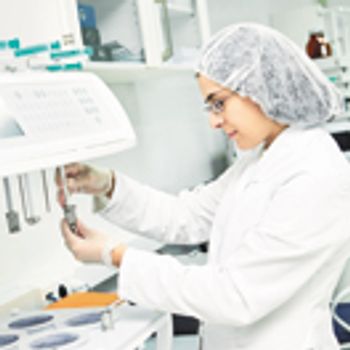
Industry experts discuss best practices for dissolution testing of poorly soluble, immediate-release, and controlled-release formulations and the different analytical approaches used.
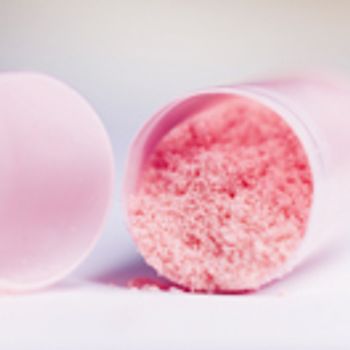
Modern air jet milling can be used to investigate the feasibility of micronization as a solubilization approach in formulation development.

Efficient synthesis of complex cannabinoids is possible while avoiding marijuana cultivation.
PTSM: Pharmaceutical Technology Sourcing and Management
Microdermics will focus on product development and clinical activities of new drug delivery methods, while Vetter’s primary role will be in the fill and finish aspect.
PTSM: Pharmaceutical Technology Sourcing and Management
BioVectra will open its new microbial fermentation and complex chemistry site, including the capability to handle high-potency APIs, by the end of 2017.
The pharmaceutical industry is making efforts by internally assessing, developing, and implementing semi-continuous manufacturing processes to improve manufacturing efficiencies.
The company will expand its production facilities in Carlow and Cork to meet increased global demand for its medicines and vaccines produced in Ireland.
CBER is moving forward with the development and approval of regenerative medicine advanced therapies.