A multi-pronged approach to raw materials testing can help mitigate the risk of future contamination events.
A multi-pronged approach to raw materials testing can help mitigate the risk of future contamination events.
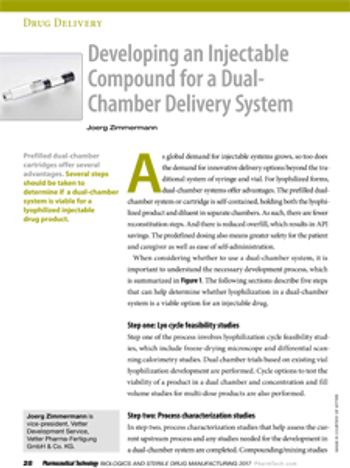
Prefilled dual-chamber cartridges offer several advantages. Several steps should be taken to determine if a dual-chamber system is viable for a lyophilized injectable drug product.
The decision to use disposable bioreactors is now driven by commercial rather than technological considerations.
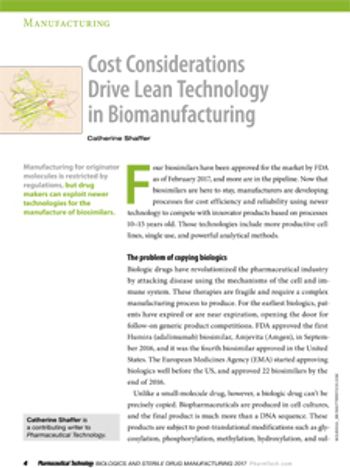
Manufacturing for originator molecules is restricted by regulations, but drug makers can exploit newer technologies for the manufacture of biosimilars.

The program aims to make biosimilars for the treatment of cancer more widely available in middle- and low-income countries.
EMA and the European Commission released a biosimilars information guide for health professionals during the EC’s biosimilars conference.
Forecasts were lowered, Reuters reported, due to reduced drug approvals and increased competitive pressures.
Recent legislation and PDUFA initiatives aim to streamline oversight and testing requirements.

Advances in chemical synthesis are enabling greener, more cost-efficient processes for API manufacturing.

Transdermal and inhaled/nasal delivery provide alternative routes of administration for macromolecules.
A new study from the United States National Institutes of Health (NIH) found that pairing the antidepressant amitriptyline with drugs designed to treat central nervous system diseases, enhances drug delivery to the brain by inhibiting the blood-brain barrier in rats. The blood-brain barrier serves as a natural, protective boundary, preventing most drugs from entering the brain. The research, performed in rats, appeared online April 27, 2017 in the Journal of Cerebral Blood Flow and Metabolism.
Sponsored Content
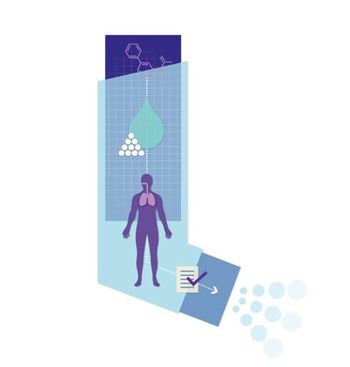
Catalent combines its formulation expertise, manufacturing excellence and particle size reduction technologies to provide a broad range of solutions in the development of inhalation and nasal drug products.
Companies believe that biologics and biosimilars would experience the fastest growth over the next year; there is also interest on increasing market penetration of generic drugs.
Sandoz, a Novartis division, announced that the Committee for Medicinal Products for Human Use (CHMP) has adopted positive opinions recommending the approval of its biosimilars rituximab and etanercept in Europe, for the same indications as the respective reference medicines.
Equipment and Processing Report
In implementing quality by design for drug formulation, it is crucial to identify the critical properties of excipients and understand how their variation affects the final drug product.
The funding allows the company to broaden its range of services and finance its move to new laboratory facilities in the Illkirch-Graffenstaden innovation park in northeast France.
Pharmaceutical Technology spoke with CPhI North America presenter Jonathan Helfgott to discuss navigating GDUFA and helpful tips for submitting successful ANDAs.
The project will foster the translation of nanomedicine applications for the treatment of cardiovascular diseases.
The agency issued its recommendation for the influenza virus strains European vaccine manufacturers should include for 2017.
In a new study, researchers from Boston Children’s Hospital study responses to pneumococcal vaccine in infant monkeys.
PTSM: Pharmaceutical Technology Sourcing and Management
Researchers continue efforts to overcome challenges of effective oral delivery of biologic drugs.
Carglumic acid is used in the management of rare, life-threatening inborn metabolic disorders affecting the urea cycle.
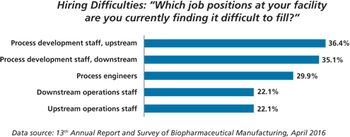
New study shows China biopharma companies face staffing shortages.

The transfer of fluids is governed by different equipment requirements across the medical, biopharma, and cell therapy manufacturing industries.
The process control and automation requirements of single-use systems differ from those of stainless-steel equipment.