




Sponsored Content
Thanks to the Integrated Architecture solution from Rockwell Automation, the Swiss company could help its customers improve productivity.
The evolution of therapeutic modalities drives the adoption of single-use technologies.

Despite its understandable hesitancy, the pharma industry is facing a need for more widespread adoption of cloud-based solutions.

Given the criticality of fill/finish processes, it is clear that automation is the next technological step.

Sponsored Content
Thanks to the Integrated Architecture solution from Rockwell Automation, the Swiss company could help its customers improve productivity.
ePT--the Electronic Newsletter of Pharmaceutical Technology
Bayer to Open San Francisco Innovation Hub; Lonza Bioscience Names COO; And More.
ePT--the Electronic Newsletter of Pharmaceutical Technology
Genzyme (Cambridge, MA) signed a consent decree of permanent injunction that requires the company to correct manufacturing-quality violations at its Allston, Massachusetts, manufacturing facility.
ePT--the Electronic Newsletter of Pharmaceutical Technology
Signaling its interest to strengthen its presence in emerging markets, Abbott (Abbott Park, IL) has agreed to acquire Piramal Healthcare Ltd.'s (Mumbai, India) Piramal Healthcare Solutions business (domestic formulations) for $3.72 billion.
ePT--the Electronic Newsletter of Pharmaceutical Technology
More acquisitions are expected as the patent cliff pushes the pharma industry into a critical phase, with many executives believing that the industry will be unable to innovate sufficiently from within to replace blockbuster drugs.
ePT--the Electronic Newsletter of Pharmaceutical Technology
Lonza Acquires MODA; Sigma-Aldrich Exec to Retire; And More.
ePT--the Electronic Newsletter of Pharmaceutical Technology
The International Federation of Pharmaceutical Manufacturers and Associations (IFPMA) published its "Ten Principles on Counterfeit Medicines" last week to draw public attention to the issue.
ePT--the Electronic Newsletter of Pharmaceutical Technology
Pfizer (New York) announced this week plans to reconfigure its global manufacturing network as part of its integration following its $68-billion acquisition of Wyeth (Madison, NJ) in 2009.
Equipment and Processing Report
Life-sciences companies spend proportionally more resources on information technology and get less in return on their investment than companies in other industries. The poor return on investment partly results from regulatory costs that are unique to the pharmaceutical industry, but also stems from a failure to manage data strategically.
Equipment and Processing Report
Online process monitoring could help companies achieve the dual goals of ensuring high end-product quality and satisfying regulatory demands.
Equipment and Processing Report
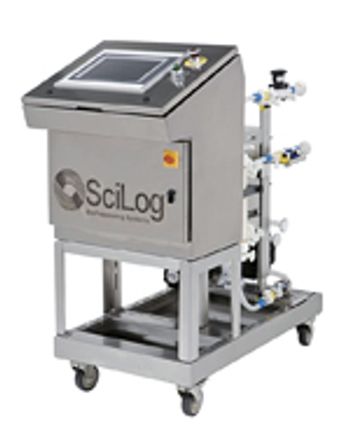
PharmTech's monthly newsletter, Equipment and Processing Report, reviews the Editor's Picks for the May 2010 edition from ATMI and SciLog.
ePT--the Electronic Newsletter of Pharmaceutical Technology
Effective May 1, 2010, the US Pharmacopeia has revised its Pending Monographs Guideline to clarify that excipients are eligible for pending-monograph status and can ultimately be included in an official National Formulary (NF) monograph.
ePT--the Electronic Newsletter of Pharmaceutical Technology
In an effort to standardize quality agreements for active pharmaceutical ingredients in the drug industry, the Bulk Pharmaceuticals Task Force, an affiliate of the Society of Chemical Manufacturers and Affiliates, has developed a template to help manufacturers and customers comply with US regulatory requirements in a simplified manner.
ePT--the Electronic Newsletter of Pharmaceutical Technology
Week Of May 10, 2010: Company And People Notes: Ariad and Merck Restructure Collaboration; Genzyme Changes Leadership; and More
Pharmaceutical Technology Europe
In response to stringent price cuts introduced in Spain, the European Generics Association (EGA) is urging the Spanish government to adopt mechanisms that will help increase the dispensing of generic medicines.
ePT--the Electronic Newsletter of Pharmaceutical Technology
The biotechnology markets in the United States, Europe, and Canada, and Australia reached aggregate profitability in 2009, according to Ernst & Young.
ePT--the Electronic Newsletter of Pharmaceutical Technology
The US Food and Drug Administration sent a letter to trade associations of manufacturers, wholesalers, and pharmacies to recommend procedures for preventing and responding to the theft of regulated products.
ePT--the Electronic Newsletter of Pharmaceutical Technology
The year 2016 will see Pfizer barely continue to cling to first place on the Top 10 pharma list, with Merck & Co. and Novartis not far behind.
ePT--the Electronic Newsletter of Pharmaceutical Technology
McNeil Consumer Healthcare is voluntarily recalling all lots that have not yet expired of certain over-the-counter children's and infants' liquid products.
ePT--the Electronic Newsletter of Pharmaceutical Technology
FDA Approves AstraZeneca's and Pozen's Vimovo; Merck Announces Management Changes; And More.

PTSM: Pharmaceutical Technology Sourcing and Management
Eli Lilly faces up to the new realities of the bio/pharmaceutical industry through outsourcing.

Defining the Next Five Years.
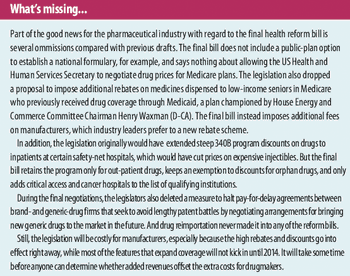
Manufacturers will pay new fees but anticipate expanded drug use and safeguards for innovation.

A method for determining sample size is finally getting some respect.

FDA wants industry to talk to them about the science underlying process innovations-really.