
ePT--the Electronic Newsletter of Pharmaceutical Technology
The two agencies issued a joint Warning Letter to the owners of a website selling unapproved products intended to treat the swine flu virus.
ePT--the Electronic Newsletter of Pharmaceutical Technology
The two agencies issued a joint Warning Letter to the owners of a website selling unapproved products intended to treat the swine flu virus.
Equipment and Processing Report
The manufacturing process, which influences a drug's safety and efficacy, is particularly critical for drugs administered through injection, and personnel must closely supervise lyophilization to ensure product quality.
Equipment and Processing Report
PharmTech's monthly newsletter, Equipment & Processing Report, reviews the Editor's Picks for the October 2009 edition from Emerson and Minitab.
Equipment and Processing Report
Economic pressures are forcing pharmaceutical manufacturers to look for ways to become more competitive. Many companies realize that they must reduce operating costs but maintain or improve product quality.
ISP Pharmaceuticals is embarking on a Drug Solubility Initiative to support pharma companies working with poorly soluble drug actives.
SAFC Pharma has completed a $12-million expansion to its contract manufacturing facility in Carlsbad (CA, USA), which will expand the company's services for its later phase and commercial clients.
ePT--the Electronic Newsletter of Pharmaceutical Technology
For the first time, cancer treatments accounted for 5% of overall drug spending in the first half of 2009, said Medco Health Solutions in a press release last week.
ePT--the Electronic Newsletter of Pharmaceutical Technology
Company and People Notes: Bayer Schering Pharma forms collaboration with Compugen; Takeda San Francisco appoints VP of process science; more...
ePT--the Electronic Newsletter of Pharmaceutical Technology
IMS Health delivered some good news last week with its updated pharmaceutical market forecast.
ePT--the Electronic Newsletter of Pharmaceutical Technology
Also, USAID and USP launch counterfeiting public service campaign in Cambodia.
ePT--the Electronic Newsletter of Pharmaceutical Technology
The US Food and Drug Administration issued an alert to healthcare professionals of a change in heparin manufacturing that is expected to decrease the drug's potency.
ePT--the Electronic Newsletter of Pharmaceutical Technology
Also, FDA partners with USDA on produce safety, and the Transparency Task Force announces its second public meeting...
ePT--the Electronic Newsletter of Pharmaceutical Technology
The 2009 Nobel Prize in Physiology or Medicine was awarded to three US researchers for the discovery of how chromosomes are protected from degradation by telomeres and the enzyme telomerase during cell division.
ePT--the Electronic Newsletter of Pharmaceutical Technology
GlaxoSmithKline (London), Novartis (Basel, Switzerland), sanofi Aventis (Paris), and Baxter International (Deerfield, IL) recently provided updates as to the development, manufacture, or shipment of pandemic (H1NI) vaccines.
ePT--the Electronic Newsletter of Pharmaceutical Technology
The US Food and Drug Administration published its first draft guidance for industry about Risk Evaluation and Mitigation Strategies (REMS) on Sept. 30, 2009.
ePT--the Electronic Newsletter of Pharmaceutical Technology
Company and People Notes: GSK forms joint venture with China-based Jiangsu Walvax Biotech; Sigma-Aldrich appoints VP and board member; more...
AAPS President offers hope and solutions for the industry's challenging future.

Pharmaceutical companies in India have had a hold on the biotechnology sector for many years, and they're not about to let the follow-on biologics market pass them by.

BIO supports recent Congressional action toward a 12-year data exclusivity period for innovators.
The nation's healtcare system needs an overhaul, but it has to be done right.
Like life, the workplace also can have many surprises.
Pharmaceutical Technology Europe PTE
Almac's expansion plans in Northern Ireland (UK) could see the creation of more than 500 jobs during the next 5 years.
Contract research organizations such as Covance are heading further east through Europe.
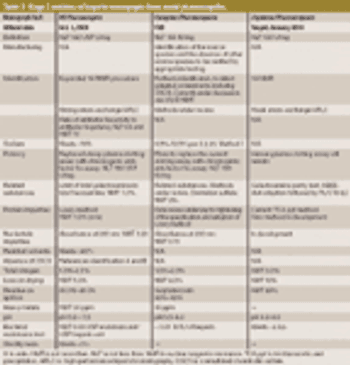
USP workshop participants support new methods to safeguard heparin products but desire international harmonization. This article contains bonus online-exclusive material.
Pharmaceutical Technology Europe PTE
The EMEA intends to fully implement its Product Information Management (PIM) approach, an initiative designed to improve information management, into the centralized procedure within 2 years, according to a statement of intent from the agency.
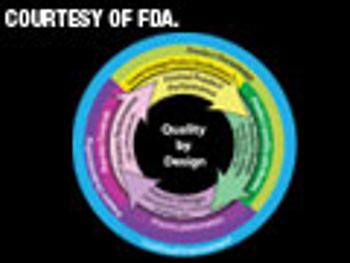
A review of NIPTE's core projects and its plans for training-and retraining-the pharmaceutical industry.
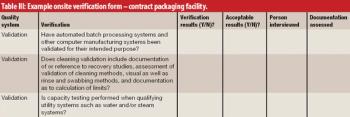
This article introduces the "Q.U.E.S.T." approach for vendor qualification, a practical and compliant methodology for pharmaceutical and biopharmaceutical companies to qualify vendors and hence make well-informed purchasing-related decisions.
As the pharmaceutical industry moves further into Central and Eastern Europe and the Commonwealth of Independent States, several standard-setting and regulatory bodies are also increasing collaboration in the region, particularly in Russia.
The author describes the framework needed to implement QbD and achieve the deeper process understanding that is fundamental to QbD.
This article is part of a Special Report on the Emerging Markets of The East, October 2009