

Pharmaceutical Technology Europe PTE
Smoller talks about the benefits of targeted knockout rats.

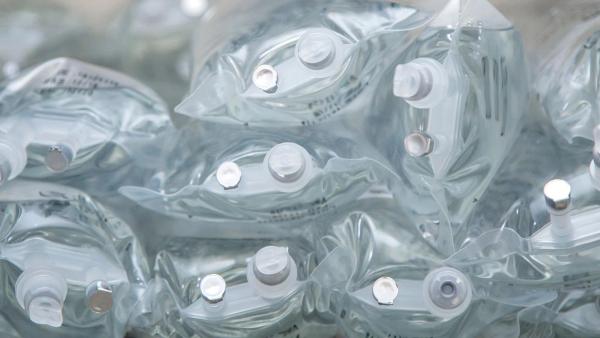
The evolution of therapeutic modalities drives the adoption of single-use technologies.
Despite its understandable hesitancy, the pharma industry is facing a need for more widespread adoption of cloud-based solutions.

Given the criticality of fill/finish processes, it is clear that automation is the next technological step.
Pharmaceutical Technology Europe PTE
Smoller talks about the benefits of targeted knockout rats.
Pharmaceutical Technology Europe
Combination products have been researched and administered for many years, some successfully and others not.
Pharmaceutical Technology Europe
Combining drugs with synergistic mechanisms of action yields some indisputable benefits; improved efficacy, reduced dosing, enhanced patient compliance, to name just a few.

Pharmaceutical Technology Europe
Increase your chances of success in the biggest market in the world.

Pharmaceutical Technology Europe
Belgium is one of the largest centres for pharmaceutical distribution and has the second highest number of pharma exports per capita worldwide.

Pharmaceutical Technology Europe
Why correctly calibrating a drug with its packaging is the key to success.

The current economic downturn has been described as the worst since the Great Depression and no industry has been left unaffected.

Pharmaceutical Technology Europe
The Czech Republic will no longer purchase the H1N1 flu vaccine from Baxter International.
Scientists have modified a tobacco plant to produce a vaccine for norovirus, the viral infection sometimes referred to as the "cruise ship virus".
ePT--the Electronic Newsletter of Pharmaceutical Technology
Lonza (Basel) has submitted a non-binding proposal that would see it acquire all of the Restricted Voting Shares of US-based Patheon.
ePT--the Electronic Newsletter of Pharmaceutical Technology
Scientists have modified a tobacco plant to produce a vaccine for norovirus, the viral infection sometimes called the "cruise ship virus."
ePT--the Electronic Newsletter of Pharmaceutical Technology
Researchers at the J. Craig Venter Institute (JCVI), a genomic research organization, reported that they successfully transformed one bacterium into a different strain by transferring the entire bacterial genome of the first strain into a second, related strain of bacteria.
ePT--the Electronic Newsletter of Pharmaceutical Technology
Company and People Notes: UCB and Novartis form agreement; AAIPharma appoints VP of regulatory affairs; more...
Pharmaceutical Technology Europe PTE
Researchers from a university in the US are urging the FDA to demand that drug manufacturers state how new medications compare with similar treatments on product labels.
Pharmaceutical Technology Europe PTE
Amcor (Australia) has made an offer of $2025 million for parts of Alcan Packaging (France), including the company's global pharmaceuticals division.
NIR Prediction of Solid Dosage Form Dissolution Profiles - Foss Whitepaper
ePT--the Electronic Newsletter of Pharmaceutical Technology
Also, FDA publishes draft guidances of two ICH Annexes; EMEA sets format for compliance advice; more...
ePT--the Electronic Newsletter of Pharmaceutical Technology
Researchers from the Stanford University School of Medicine in California are urging the US Food and Drug Administration to demand that drug manufacturers state how new medications compare with similar treatments on product labels.
ePT--the Electronic Newsletter of Pharmaceutical Technology
India accounts for approximately 3% of the global outsourcing market, which indicates a significant opportunity for growth, according to a report published by Ernst and Young and the Organization of Pharmaceutical Producers of India.
ePT--the Electronic Newsletter of Pharmaceutical Technology
An initiative to develop consensus-based industry standards to identify and define green chemicals and process technologies is underway.
ePT--the Electronic Newsletter of Pharmaceutical Technology
Also, XCELERON and GSK form agreement; Millipore appoints VP of life sciences; more...
ePT--the Electronic Newsletter of Pharmaceutical Technology
Manufacturing methods for new drugs could be made greener and more efficient with the help of marine microbes.
Equipment and Processing Report
The US Food and Drug Administration?s Draft Guidance for Industry?Process Validation: General Principles and Practices provides a life-cycle approach for validating pharmaceutical processes and aims to help pharmaceutical companies achieve consistently high product quality.
Equipment and Processing Report
PharmTech's monthly newsletter, Equipment & Processing Report, reviews the Editor's Picks for the August 2009 edition from AEC and Sensor Products.
Equipment and Processing Report
Cooling water is a critical component in the research and development, bulk manufacturing, and packaging of pharmaceuticals.