


Pharmaceutical Technology Europe PTE
Vetter (Germany) is intending to open a technologically advanced customer services facility at the end of 2009 in Chicago (US).
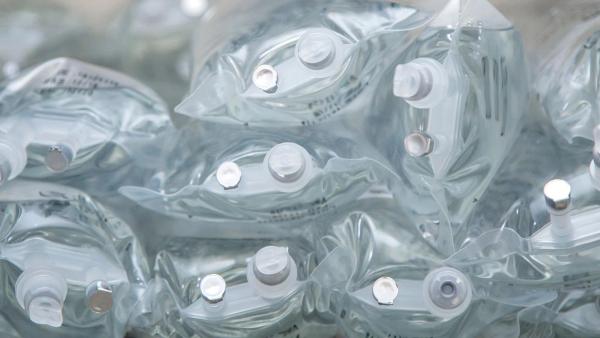
The evolution of therapeutic modalities drives the adoption of single-use technologies.
Despite its understandable hesitancy, the pharma industry is facing a need for more widespread adoption of cloud-based solutions.

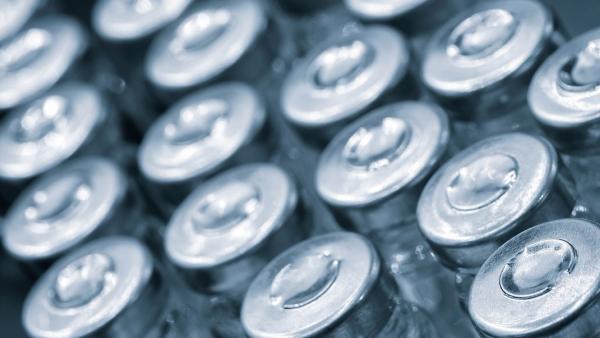
Given the criticality of fill/finish processes, it is clear that automation is the next technological step.
Pharmaceutical Technology Europe PTE
Vetter (Germany) is intending to open a technologically advanced customer services facility at the end of 2009 in Chicago (US).
Pharmaceutical Technology Europe PTE
While pharma is not synchronized with the boom and bust of the general economy, lessons from the business cycle facing manufacturers can enable the pharmaceutical industry to tackle the problems it faces.
Pharmaceutical Technology Europe PTE
The Gerresheimer Group is opening two new centres: an R&D center for medical plastic systems in the US and a new production center for pharmaceutical plastic packaging in Spain.
Pharmaceutical Technology Europe PTE
A joint venture between a charity and a pharma giant has led to the creation of the Hilleman Laboratories, which will use a not-for-profit operating model to develop and deliver vaccines to low-income countries.
ePT--the Electronic Newsletter of Pharmaceutical Technology
A report from the European Medicines Agency (EMEA) has highlighted the critical fact that there are not enough new antibiotics in the pharmaceutical industry's pipeline to fight multidrug-resistant bacteria.
ePT--the Electronic Newsletter of Pharmaceutical Technology
Many pharmaceutical companies in the United Kingdom are turning to basic business-skills training to help them emerge from the recession stronger than before.
ePT--the Electronic Newsletter of Pharmaceutical Technology
Company and People Notes: Wyeth and Ambrx form development pact; Elite Pharma appoints CEO and CSO; more...
ePT--the Electronic Newsletter of Pharmaceutical Technology
The US Food and Drug Administration sent Bayer Schering Pharma (Berlin) a Warning Letter on Aug. 5, 2009, citing deviations from current good manufacturing practice in the manufacture of nonsterile active pharmaceutical ingredients (APIs).
Semisolid Formulation Development: The CRO Approach - SP Formulations Whitepaper
Pharmaceutical Technology Europe PTE
The FDA has approved four vaccines for the H1N1 influenza virus, while other companies, including UK pharma giant GlaxoSmithKline (GSK), have reported promising results from clinical studies with a single dose vaccine.
Pharmaceutical Technology Europe PTE
The current pharmaceutical model is in danger of becoming "irrelevant in the context of 21st century's global healthcare needs", according to a white paper published by global management consultancy firm A.T. Kearney.
Pharmaceutical Technology Europe PTE
AM Technology (UK) has joined an EU-funded project that seeks to develop flow processes for the industrial synthesis of pharmaceutical compounds.
ePT--the Electronic Newsletter of Pharmaceutical Technology
Vaccine makers and other pharmaceutical manufacturers using yeast protein-expression systems are taking note of a discovery this week by a team of researchers who have found RNA interference in Saccharomyces castellii.
ePT--the Electronic Newsletter of Pharmaceutical Technology
Eli Lilly and Company (Indianapolis, IN) is undergoing a companywide reorganization that is intended to accelerate the progress of the company's pipeline.
ePT--the Electronic Newsletter of Pharmaceutical Technology
The US Food and Drug Administration has approved four vaccines for the H1N1 influenza virus, while other companies, including GlaxoSmithKline (GSK), have reported promising results from clinical studies with a single dose vaccine.
ePT--the Electronic Newsletter of Pharmaceutical Technology
Company and People Notes: Sanofi Pasteur signs H1N1 vaccine deal with Brazilian government; Helsinn Group appoints CEO of US business; more...
Equipment and Processing Report
PharmTech's monthly newsletter, Equipment & Processing Report, reviews the Editor's Picks for the September 2009 edition from Gore and Oystar.
Equipment and Processing Report
Small-format packaging equipment can provide benefits to the pharmaceutical industry such as quick changeover and low tooling costs. The machines also can shorten the time it takes to bring a product to the market.
Equipment and Processing Report
Investing time and money in auditing and optimizing a steam system can pay off quickly, especially because the costs of energy, maintenance, and downtime are steadily rising.
Humidity Measurement in Cleanrooms - Vausaka Whitepaper
ePT--the Electronic Newsletter of Pharmaceutical Technology
The European Commission (EC) has made EUR 1 billion available for new projects involving micro and nanotechnology.
ePT--the Electronic Newsletter of Pharmaceutical Technology
Generic-drug companies are increasingly viewing the development of controlled-release formulations as a way of obtaining a competitive edge, according to a report published by Espicom Business Intelligence in late August 2009.
ePT--the Electronic Newsletter of Pharmaceutical Technology
Company and People Notes: Neoprobe and Laureate Pharma form manufacturing agreement; Akela Pharma appoints CEO and chairman; more...
ePT--the Electronic Newsletter of Pharmaceutical Technology
In move designed to increase its position in North America, Dainippon Sumitomo Pharma (DSP, Osaka, Japan) has agreed to acquire the specialty pharmaceutical company Sepracor (Marlborough, MA) for $2.6 billion.
Now expected to obtain its production license during the next few days, an H1N1 vaccine developed by Sinovac Biotech (China) has passed the experts' evaluation by the Chinese State Food and Drug Administration (SFDA).