

PTSM: Pharmaceutical Technology Sourcing and Management
The addition of 20,000 sq. ft. of manufacturing and office space increases Avecia’s Milford, Ma, oligonucleotide capacity to 3.0 mol.
Contract service providers must step up their game to stay competitive in increasingly complex bio/pharma market.

A look at the newest innovations offers a deeper understanding of affinity ligands and their role in the future of downstream processing.

PTSM: Pharmaceutical Technology Sourcing and Management
The addition of 20,000 sq. ft. of manufacturing and office space increases Avecia’s Milford, Ma, oligonucleotide capacity to 3.0 mol.
PTSM: Pharmaceutical Technology Sourcing and Management
Alcami will move its headquarters to Durham, NC while maintaining its manufacturing and laboratory operations in Wilmington, NC.
Respondents cited instrument maintenance and downtime, complexity of testing requirements, and time-consuming sample preparation as the top challenges in their laboratories.
Pfizer’s new format of ibuprofen (AdvilR Liqui-GelsR Minis) uses Catalent’s softgel technology to deliver the formulation in a more concentrated fill, resulting in smaller capsules.
GE Healthcare’s Dharmacon business and CordenPharma contract manufacturing enter a strategic collaboration to accelerate the oligonucleotide development process.
PTSM: Pharmaceutical Technology Sourcing and Management
Recro Gainsville expands its tableting capacity with the addition of a tablet press and film coater.
PTSM: Pharmaceutical Technology Sourcing and Management
The suite installation increases PCI’s Hay-on-Wye site’s serialization capability to support clients in advance of meeting the implementation dates of the European Falsified Medicines Directive.
A $5.5 billion acquisition brings Capsugel’s oral dosage delivery capabilities to Lonza’s portfolio.
PTSM: Pharmaceutical Technology Sourcing and Management
Samsung BioLogics signs $55.5 million agreement to manufacture tildrakizumab for Sun Pharma.
PTSM: Pharmaceutical Technology Sourcing and Management
Patheon will add spray drying, sterile manufacturing, and packaging capabilities to four facilities.

How has the bio/pharmaceutical contract manufacturing industry evolved over the years and what does the future hold?

As pharma models changed during the past 40 years, contract manufacturing capacity and services evolved to meet demand.

The more pharma science and technology change, the more business and policy concerns stay the same.
SK Biotek plans to operate the Swords, Ireland API manufacturing facility as a contract development and manufacturing site.
Sartorius Stedim Biotech combined the company’s ambr 15 bioreactor system with the Nova BioProfile FLEX2 cell culture analyzer for laboratory experiments.
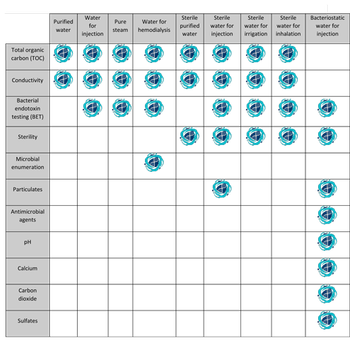
USP describes analytical and microbiology testing required for different types of pharmaceutical water.
PTSM: Pharmaceutical Technology Sourcing and Management
Cambrex announces expansions of its North Carolina API pilot plant and Kalskoga, Sweden large-scale manufacturing facility.
PTSM: Pharmaceutical Technology Sourcing and Management
Increased capacity at PPD’s Richmond, VA laboratory are designed to support customers’ vaccine development programs.
PTSM: Pharmaceutical Technology Sourcing and Management
Expanded storage capacity at the SGS laboratory in Mississauga, Canada increases stability testing capabilities.
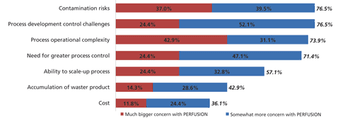
Although widespread adoption of continuous bioprocessing has been slow, some processes have been an exception.
PTSM: Pharmaceutical Technology Sourcing and Management
Microdermics will focus on product development and clinical activities of new drug delivery methods, while Vetter’s primary role will be in the fill and finish aspect.
PTSM: Pharmaceutical Technology Sourcing and Management
BioVectra will open its new microbial fermentation and complex chemistry site, including the capability to handle high-potency APIs, by the end of 2017.
PTSM: Pharmaceutical Technology Sourcing and Management
The company expanded its UK storage facility to meet increasing demand from its growing customer base.
PTSM: Pharmaceutical Technology Sourcing and Management
The company installed the FlexFactory to support its biosimilar production.
PTSM: Pharmaceutical Technology Sourcing and Management
The compendium provides a resource to identify and locate targeted suitable patient-derived xenografts based on specific histology and molecular properties.