

PTSM: Pharmaceutical Technology Sourcing and Management
The agency published guidance on identifying trading partners under DSCSA.
PTSM: Pharmaceutical Technology Sourcing and Management
The agency published guidance on identifying trading partners under DSCSA.
PTSM: Pharmaceutical Technology Sourcing and Management
Pilot tests will evaluate a system developed by Ambrosus Technologies, using smart contracts and advanced sensors to ensure pharmaceutical quality, safety, and traceability.
Artificial intelligence offers a number of opportunities in pharmaceutical drug development and manufacturing, but there are barriers to overcome, notably around how well and how quickly the regulatory environment can adapt and keep pace with to the rapid changes.
PTSM: Pharmaceutical Technology Sourcing and Management
Efforts to establish an international system for identifying and tracing drugs through the global supply chain are moving forward.
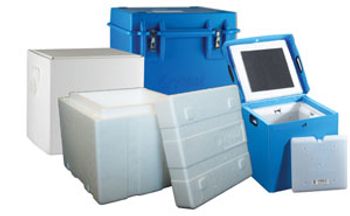
Cryopak’s CryoCube reusable temperature-controlled shipping systems are available in several insulation categories, and a tailored solution can be modeled using thermal modeling software.
TraceLink’s Graham Clark, director of contract supplier relationships and cofounder, and Brian Daleiden, vice-president of industry marketing, shared insights into industry’s serialization readiness as well as recent trends and developments with Pharmaceutical Technology.

Advanced digital ledger technologies offer potential solutions, but are still several years away from practical use.
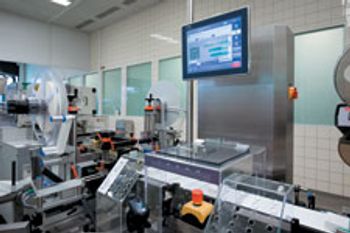
The contract development and manufacturing organization (CDMO) Aesica Pharmaceuticals has had a serialization program in place for the past five years, and recently installed capabilities for serialization at all its packaging facilities.
PTSM: Pharmaceutical Technology Sourcing and Management
The agency will lead an international team to create a Supply Chain Security Toolkit of resources to educate the pharmaceutical and healthcare industries on supply chain vulnerabilities.
PTSM: Pharmaceutical Technology Sourcing and Management
Intertek seeks to bring cost efficiencies to the pharmaceutical supply chain through confidential shared audits.
PTSM: Pharmaceutical Technology Sourcing and Management
TruTags, the company’s silicon dioxide microtags, won Frost & Sullivan's 2017 North American Award for Technology Innovation.
The agency has pushed back by one year the deadline for compliance with DSCSA serialization requirements.
PTSM: Pharmaceutical Technology Sourcing and Management
A survey from The Pistoia Alliance found that just under a quarter (22%) of life-science companies are already using or experimenting with blockchain, but industry collaboration on security and storage standards is needed.
PTSM: Pharmaceutical Technology Sourcing and Management
In a new research conducted by SEA Vision and Zenith Technologies, 28% of respondents identified technology selection as the biggest challenge as the industry prepares to meet serialization deadlines.
The author shares his opinion on the challenges presented by the Internet of Things and what companies need to consider when choosing suitable architectures to manage serialization data.
The new UPS facility in Columbia will serve the growing pharmaceutical, biopharma, and medical device industry in Latin America.
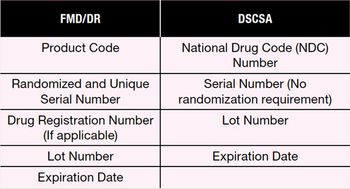
The author discusses upcoming serialization and transaction data collection regulations including the US Drug Supply Chain Security Act, the European Union Falsified Medicines Directive, and the EU Delegated Regulation.

Serialization and complementary authentication technologies are needed in order to meet DSCSA and FMD regulations.
PTSM: Pharmaceutical Technology Sourcing and Management
A recent survey suggests that 36% of pharmaceutical companies and contract development and manufacturing companies have not started working on serialization, and that those who are working on it are focusing on basic compliance rather than potential long-term business benefits.
PTSM: Pharmaceutical Technology Sourcing and Management
Due to weak penalties and lax enforcement, illicit pharmaceuticals continue to slip into the US, European and global supply chains.
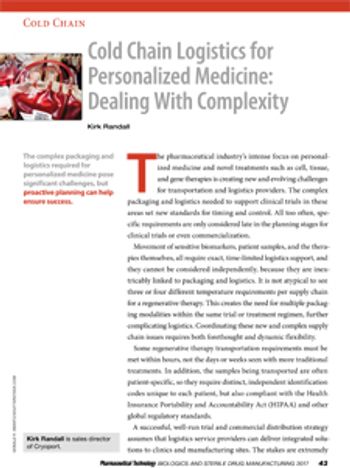
The complex packaging and logistics required for personalized medicine pose significant challenges, but proactive planning can help ensure success.

Good project management, budgeting, planning, and clear documentation are the only ways to prevent overruns and project failure.
PTSM: Pharmaceutical Technology Sourcing and Management
Pharmaceutical Technology spoke with Brad Pedrow and Rajesh Singh of Deloitte Consulting to discuss serialization implementation, and what to expect as the DSCSA deadline approaches.
igital tracking of overall equipment effectiveness can improve efficiency.
PTSM: Pharmaceutical Technology Sourcing and Management
Uhlmann Packaging Systems joined the OPC Foundation’s Open Serialization Communication Standard (OPEN-SCS) Working Group.