


Regulations and industry guidelines focus on ensuring excipient safety by specifying risk assessments and shared responsibility.
Regulations and industry guidelines focus on ensuring excipient safety by specifying risk assessments and shared responsibility.

While more companies are embracing taggants, researchers are developing new technologies that will be extremely difficult to reproduce.
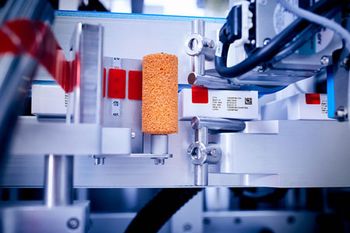
The Tamper Evident Labeller from LSS Labelling Systems Scandinavia is compliant with the European Falsified Medicines Directive.

Pharma Team Up has launched Poseidon, an integrated ocean freight program, to address the disconnect between pharma companies and their logistics providers.
Pharmaceutical companies and contract manufacturing organizations report lack of readiness for the US Drug Supply Chain Security Act serialization deadline.
A review of 2017 advancements from the Open-SCS working group with Charlie Gifford, group technical director.
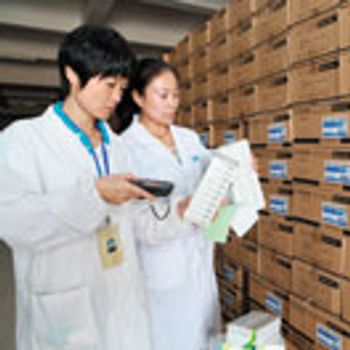
Everyone may not be ready for the deadline, but open standards based on GAMP and GS1 will soon be released; more companies are also leveraging what they’ve learned from serialization to improve overall efficiency.
Equipment and Processing Report
Implementation of the Packaging Serialization Standard cuts serialization costs, shortens deployment time, and expedites compliance with anticounterfeiting regulations.
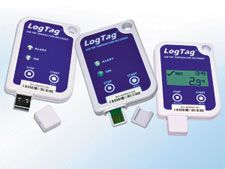
Oceasoft has updated its line of Bluetooth-enabled temperature data loggers for shipping and logistics applications.

Cross-functional reliability rooms identify risk and planning metrics, provide insights for production forecasts, and predict trends and areas for improvement.
PTSM: Pharmaceutical Technology Sourcing and Management
Manufacturers and trading partners struggle to meet drug tracking requirements

This article explores some of the challenges, services, and technologies that go into ensuring that vaccines are properly temperature controlled and maintain product integrity for delivery to patients.
Supply Chain Wizard has developed a set of integrated digital solutions to improve supply chain functions.
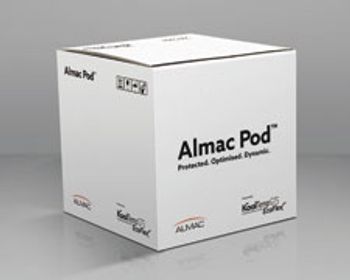
The Almac Pod, a temperature-controlled shipping solution service for biologics and other temperature-sensitive products, is compliant with good distribution practices and comes in three models.

Despite GxP and data-management challenges, pharma is moving toward new models for clinical trial logistics.
PTSM: Pharmaceutical Technology Sourcing and Management
Most pharma supply chain partners believe that manufacturers should pay for blockchain implementations, and own the data.
PTSM: Pharmaceutical Technology Sourcing and Management
Almac Group’s Almac Pod, a temperature-controlled shipping solution service for biologics and other temperature-sensitive products, is available in the United States.
Baxter and FDA are working together to prevent shortages of the company’s sodium chloride 0.9% injection bags after recent hurricanes damaged the island.
FDA and manufacturers strive to prevent drug shortages from Hurricane Maria.
PTSM: Pharmaceutical Technology Sourcing and Management
Genentech, AmerisourceBergen, and McKesson are providing pharma user requirements for a new project that will evaluate blockchain‘s potential in meeting requirements of the Drug Supply Chain Security Act, and preventing pharmaceutical counterfeiting.
PTSM: Pharmaceutical Technology Sourcing and Management
Virgin Atlantic Cargo and Delta Cargo have opened a new Pharma Zone at their joint facility at London Heathrow Airport for the handling and storage of pharmaceutical shipments.
PTSM: Pharmaceutical Technology Sourcing and Management
Internet of things, advanced analytics, and blockchain solutions such as smart contracts promise to give manufacturers more control over products and supply chains.
PTSM: Pharmaceutical Technology Sourcing and Management
DoKaSch Temperature Solutions, a Germany-based provider of climate-controlled air cargo containers, announced that its Opticooler air cargo containers are now available in the United States.
PTSM: Pharmaceutical Technology Sourcing and Management
UPS has revealed a new system to improve drug supply chain security, in compliance with the Drug Supply Chain Security Act (DSCSA).
PTSM: Pharmaceutical Technology Sourcing and Management
FDA participated in a global operation to combat the sale and distribution of unapproved and illegal drugs.