

This week, the FDA opened applications for its Expedited IND Pilot, quality experts presented at the PDA/FDA Joint Regulatory Conference, and Hovione expanded its spray drying capacity.
This week, the FDA opened applications for its Expedited IND Pilot, quality experts presented at the PDA/FDA Joint Regulatory Conference, and Hovione expanded its spray drying capacity.
Christy Owings, Thermo Fisher, explains clinical trial supply chain risks in Latin America, importer-of-record strategy, AI, and eCOA delays.

PharmTech AI Pulse Check debuts: pharma experts tackle GxP 'slop,' multi-agent validation risk, OCR document mining, personalized mRNA cancer therapy.

Andrea K. Kerrigan, FDA, outlines how validation, data integrity, and QRM determine whether digital tools and AI strengthen or undermine CGMP compliance.

PharmTech spoke with Tara Dougal, event director for pharma at Informa Markets, about trends impacting the pharmaceutical industry and how CPHI Milan is addressing these areas this year.
Andrew Parker, PhD, executive drug development consultant, Quotient Sciences, explains how AI is integrated into pharmaceutical development.

PDA/FDA 2026 session maps the GMP audit lifecycle, root cause to CAPA closure, plus a local vs. above-site decision framework and two case studies.
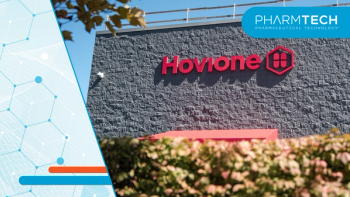
The recently opened NJ spray drying facility doubles capacity for amorphous solid dispersions, addressing solubility limits in roughly 70% of small-molecule pipelines.

Lori Dingledine, QC Director Microbiological Control and GTIC Operations at Genentech, provided input on the regulations surrounding raw material manufacturing and use for ATMPs in a presentation at the 2026 PDA/FDA Joint Regulatory Conference.

FDA opens applications for its Expedited IND Pilot, pairing sponsors with qualified research institutions to test rolling CMC review ahead of first-in-human trials.
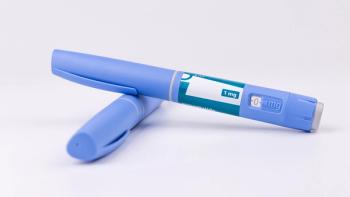
2026 approvals, clinical data, and licensing deals are advancing subcutaneous biologics, reducing patient burden, and reshaping biopharma drug strategy.

Karthik Iyer, Eli Lilly, detailed an AI system linking GMP findings, audits, and deviations for cited, inspection-ready regulatory intelligence.
At the PDA/FDA Joint Regulatory Conference 2026, Helen Motamen, MS global head, Sanofi Quality Audit, Inspection, Intelligence & Advocacy, at Sanofi, provided advice for creating a strong internal audit program.

At PDA/FDA Joint Regulatory Conference 2026, PCI Pharma's Bassler details how a QMS overhaul turned an FDA 483 into stronger quality culture.

AI can turn medical device risk management into a continuous signal.

Sanofi will transfer 20 mature medicines and three manufacturing sites to Cheplapharm for a 26.4% equity stake, closing by Q3 2027.
Andrew Parker, PhD, executive drug development consultant, Quotient Sciences, explains that developing a molecule requires a holistic view of its chemical, physical, and biological properties.

On PharmTech.com this week, coverage of upcoming events continued, experts continued to discuss the use of AI in pharma, and validation in oral solid dosage product production was emphasized.
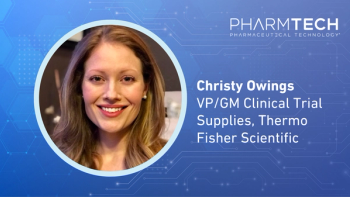
Christy Owings, Thermo Fisher, on why early supply chain partnership and site visits prevent costly eCOA and clinical trial delays.

This article explores the historical use of silicone oil in the performance of primary drug product packaging; design of experiment test results for selection of the cleaning agent and CCPs; assessment of visible residue limits and Fourier-transform infrared spectroscopy surface analysis; and setting health-based exposure limits for silicone oil using a non-uniform distribution model, and a previously published permitted daily exposure.

Shilpa Pharma Lifesciences Limited will launch a new small-molecule CDMO at CPHI Milan in October.

The EU is focused on strengthening supply-chain resilience, avoiding medicine shortages, simplifying regulations, and implementing new approach methodologies.
Christy Owings, Thermo Fisher, on how AI complements clinical supply chain expertise, streamlines site logistics, and tracks shifting biotech markets.
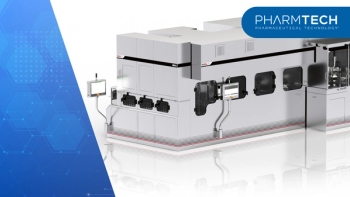
The IMA Pharmaceutical and MedTech divisions will be highlighting the TILE-X fill-finish line, a new VPHP BioIndicator, X-PEN autoinjector platform, and a range of machines from its IMA Active, IMA Life, IMA Safe, and IMA BFB divisions at the CPHI Milan event.
In commercial tablet or capsule operations, validation helps protect the site’s ability to produce, release, and supply product without repeated disruption. This article discusses validation as a technical control system that supports manufacturing continuity.

This article explains the 4 shifts enabling faster, lower-risk, commercially successful biologics technology transfer.
Christy Owings, Thermo Fisher, speaks on why importer of record strategy and vetted local partners are key to reliable clinical trial supply chains.
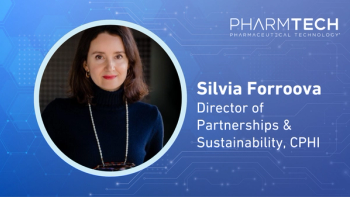
Silvia Forroova, director of Partnerships & Sustainability at CPHI, and founder of the CPHI Sustainability Collective, provides a preview of the new Sustainability Summit at CPHI Milan 2026.
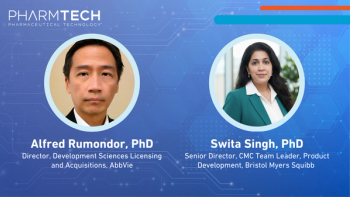
In a preview of their panel discussion at AAPS PharmSci 360 2026, Alfred Rumondor, PhD, AbbVie, and Swita Singh, PhD, Bristol Myers Squibb, discuss navigating CMC requirements for new modalities and AI’s involvement in CMC.
Christy Owings, Thermo Fisher, discusses how customs delays and import complexity risk clinical trial supply chains in Latin America.