

Understanding the API, delivery mechanism, and excipient functionality is essential to solving drug solubility challenges.

Cynthia A. Challener is a contributing editor to Pharmaceutical Technology.
Understanding the API, delivery mechanism, and excipient functionality is essential to solving drug solubility challenges.

Pharmaceutical Technology's In the Lab eNewsletter
With higher volumes of analytical date being generated in pharmaceutical processing, digitization and platform integration are becoming increasingly important to implement.
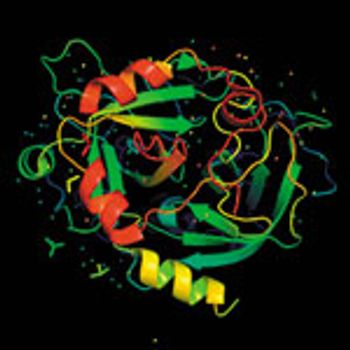
New platform technologies, advanced modeling tools, and addressing patient needs are important developments.
Leveraging vast quantities of analytical data requires digitalization and platform integration.

Orphan and cancer drugs continue to lead, but treatments for many common diseases were also approved in 2018.

Microbial identity data can be critical for determining contamination sources.

Antibody-based drugs offer new mechanisms of action and greater specificity.

Demand for highly potent APIs continues to rise.

Integration of new modeling and analytical tools with flow chemistry are notable trends.

Existing software tools cannot take into account the complexity of disease.

Low-temperature chemistry enables performance of more challenging and selective chemistry.

Pharmaceutical Technology's In the Lab eNewsletter
For more advanced NGS-based methods, regulatory acceptance and validation are still needed.

Biopharma seeks alternatives that meet the needs for next-gen biologic drug production.

With the right excipients, formulators can control when, where, and how an API is released.
From separation systems to reactor technology, new tools are increasing the feasibility of continuous API production.

Pharmaceutical Technology's In the Lab eNewsletter
Complex protein formulations require multiple analytical techniques to achieve full characterization.

Bioprocess understanding, the right equipment, and automation help, but multifunctional teamwork is the key to API production success.
Access to multiple analytical techniques is essential for fully characterizing complex protein formulations.

CMOs/CDMOs that are easy to work with, have demonstrated performance track records, and plan for the future are preferred.

Highly complex APIs developed to treat rare and orphan diseases present big technical questions for contract developers.

Regulations and industry guidelines focus on ensuring excipient safety by specifying risk assessments and shared responsibility.

FDA looks to achieve near-record level of new drug approvals following slowdown in 2016.

PTSM: Pharmaceutical Technology Sourcing and Management
Formulation and excipient advances address taste masking concerns to improve medication adherence in pediatric, geriatric, and other special patient populations.

For many processes involving hazardous chemistry, running in flow mode has safety and economic advantages.

The use of approved platform technologies can reduce the time and cost required to generate new vaccines.
Taste masking increases drug acceptability and medication adherence in pediatric, geriatric, and other special patient populations.

PTSM: Pharmaceutical Technology Sourcing and Management
CDMOs sharpen skills for identifying API potency risks and establishing safety and handling procedures.

PTSM: Pharmaceutical Technology Sourcing and Management
Compared to traditional drug discovery approaches, drug repurposing, repositioning, and rescue can be faster and cheaper.
CDMOs have established strategies for handling new chemical entities with unknown biological activity.

PTSM: Pharmaceutical Technology Sourcing and Management
Media manufacturers improve processes and technologies to reduce risks and improve quality and consistency, while managing costs.