


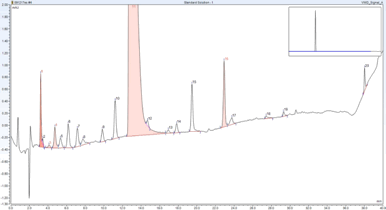


Drawing on practical experience, the authors examine key questions and answers about various aspects relating to the enhanced approach for analytical procedure lifecycle management.
There is a great need for sensitive, precise, and easily accessible analytical detection techniques for protein sequencing.
The emergence of mRNA vaccines and cell and gene therapies has pushed innovation in analytical methods.
Effective analytics will eliminate failures, deviations, and non-conformances.

Drawing on practical experience, the authors examine key questions and answers about various aspects relating to the enhanced approach for analytical procedure lifecycle management.
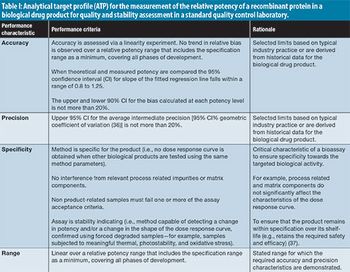
Three hypothetical analytical target profiles (ATPs) are provided, reflecting the current thinking of the the European Federation of Pharmaceutical Industries and Associations Analytical Lifecycle Management Team.

Pharmaceutical Technology's In the Lab eNewsletter
A new, high-throughput microplate reader cuts down on screening time and works faster than standard ultra-high-performance liquid chromatography processes.
Pharmaceutical Technology's In the Lab eNewsletter
The partnership, co-funded by Enterprise Ireland, will develop technologies for monitoring the quality of biopharma processes.

Industry–academia collaborations seek to address unmet needs in measurement science.

The testing of raw materials is essential as raw material quality determines the outcome of biologic product quality.

By reducing the number of assays needed and allowing product quality attributes to be measured end to end, MAM promises to allow users to gain product and process understanding much sooner than they could in the past, and to ensure quality and safety in a more efficient, streamlined way, throughout the product life cycle.

By adapting techniques from other sciences-and exploring better tools for biologics drug development-researchers are addressing challenges of protein characterization.

If a vortex mixer produces too much energy during sample preparation for particle size analysis, the size and morphology of particles can change. A study compares the applied shear to sample suspensions of ibuprofen to observe the effects of applied shear on the particle size distribution.
This article discusses why it is important to apply risk analysis, QbD, and DoE in the development of analytical methods.

This paper describes how the concept of acceptance value can be redefined to remove bias and more closely reflect quality targets.
Survey results and record attendance show positive signs for various bio/pharma regions.
Pharmaceutical Technology's In the Lab eNewsletter
The company has broken ground on the construction of a new laboratory space.
Pharmaceutical Technology's In the Lab eNewsletter
he acquisition expands the company’s formulation and analytical R&D services.
Pharmaceutical Technology's In the Lab eNewsletter
The company introduced a new approach to chemical imaging that provides enhanced clarity.
Pharmaceutical Technology's In the Lab eNewsletter
The investment in the company’s Mississauga, Canada, laboratory includes an expansion of existing cell/tissue culture capabilities, flow cytometry, mass spectrometry facilities, and more.
Pharmaceutical Technology's In the Lab eNewsletter
Lonza’s Capsugel Colorista capsule R&D solution can cut overall development time and offers greater flexibility during technical color development.

Integration of new modeling and analytical tools with flow chemistry are notable trends.
Efforts strive to harmonize bioanalytical method validation for non-clinical and clinical studies.
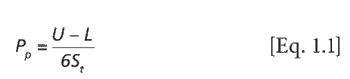
This article applies the basics of stability, performance, and capability to modern process performance and capability indices.

Experts weigh in on up-to-date analytical procedures for the lot release testing of small-molecule pharmaceuticals.

The LCMS-9030 quadrupole time-of-flight (TOF) liquid chromatograph mass spectrometer from Shimadzu is a researchgrade mass spectrometer suited to deliver high-resolution, accurate-mass detection with fast data acquisition rates.
Pharmaceutical Technology's In the Lab eNewsletter
The companies collaborated to launch a new cell-based profiling service for biochemical assay.
Pharmaceutical Technology's In the Lab eNewsletter
New software tools by Tecan, a provider of automated laboratory instruments and solutions, complement each other to enhance process monitoring of its liquid-handling platforms.
The European Medicines Agency’s detection of a second nitrosamine in a sartan API is driving a deeper dive into tetrazole chemistry; root-cause investigations will now include not only valsartan and losartan, but candesartan, irbesartan, and olmesartan.