



Pharmaceutical Technology's In the Lab eNewsletter
LabVantage Solutions’ LabVantage 8.4 is the latest version of the company’s comprehensive laboratory information management system.
There is a great need for sensitive, precise, and easily accessible analytical detection techniques for protein sequencing.
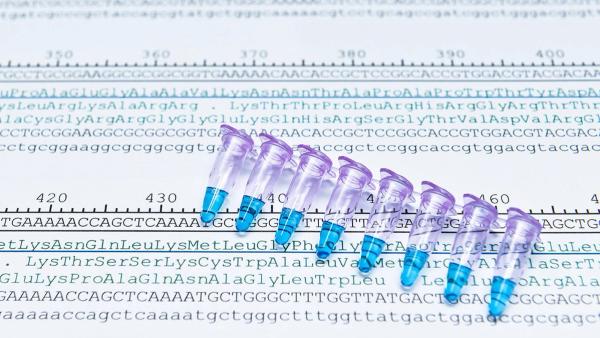
The emergence of mRNA vaccines and cell and gene therapies has pushed innovation in analytical methods.
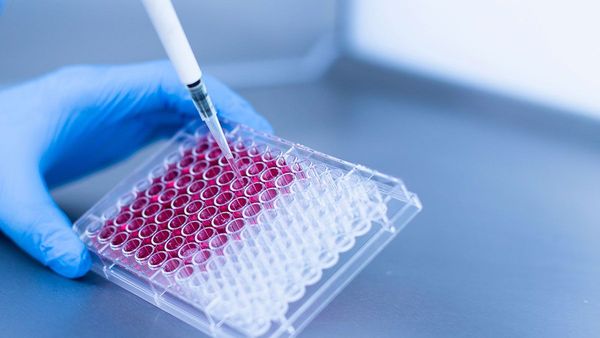
Effective analytics will eliminate failures, deviations, and non-conformances.

Pharmaceutical Technology's In the Lab eNewsletter
LabVantage Solutions’ LabVantage 8.4 is the latest version of the company’s comprehensive laboratory information management system.
Pharmaceutical Technology's In the Lab eNewsletter
HORIBA’s new analytical microscope simultaneously performs elemental analysis and optical observation without destroying samples.

Pharmaceutical Technology Europe
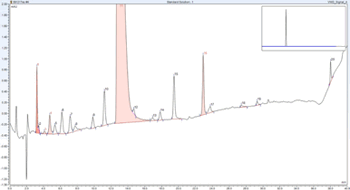
Investigation of peak purity failure during HPLC method validation led to discovery of a co-eluting impurity under the main peak. Spectral analysis, including three-dimensional modelling, was used to characterize the peak, leading to the development of a new HPLC method for analysing impurity content.
Pharmaceutical Technology's In the Lab eNewsletter
The TSKgel FcR-IIIA-NPR HPLC column from Tosoh Bioscience is a FcRγ affinity chromatography analysis column suited for the analysis of immunoglobulin G glycoforms.
Pharmaceutical Technology's In the Lab eNewsletter
The companies will develop a software-connected pipetting system for improved reproducibility and traceability in life-science laboratories.

Spectroscopic-based control methods were introduced as equivalent alternative methods, first to a gas chromatographic method to monitor an in-process solvent exchange step and second to a potentiometric titration method to release a process input material for drug substance manufacturing.

Leveraging vast quantities of analytical data requires digitalization and platform integration.

When transferring a method from R&D to quality control, success hinges on discovering where “the best” and “the most reliable” intersect.

Novel analytical methods may help biologics manufacturers respond to stricter regulations on particulate matter.
Pharmaceutical Technology's In the Lab eNewsletter
Formulatrix’s FLO i8 and Flow Axial Seal Tip liquid handlers offer automated transferring.
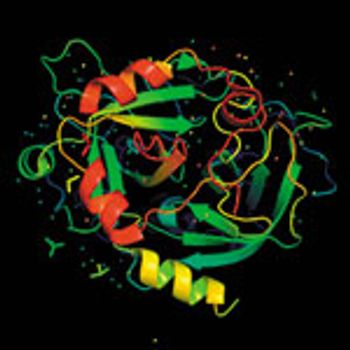
Drug developers must understand the complex bioanalytical assays for cell- and gene-therapy drug development programs and ensure that partners have the specialized expertise needed for complex therapeutic classes.

Outsourcing of analytical testing and processes can help bio/pharmaceutical companies expand their product profiles.
Pharmaceutical Technology spoke with John Pirro, senior director of large molecule bioanalysis at WuXi AppTec, which provides anti-drug antibody (ADA) and neutralizing antibody (Nab) assay development, validation, and sample analysis services, about best practices to ensure that biologics are safe and effective.
SGS announces expansion of cell bank and bulk harvest testing services.
Pharmaceutical Technology's In the Lab eNewsletter
The company has built a fit-for-purpose liquid chromatography–mass spectrometry (LC–MS) system to streamline analytical monitoring tests for biopharmaceuticals.
Tornado Spectral Systems, winner of the 2018 CPhI Excellence in Pharma Award for Analysis, Testing, and Quality Control, discusses real-time process measurement for biopharmaceutical and small-molecule drug manufacturing.
Pharmaceutical Technology's In the Lab eNewsletter
A new plasma B cell antibody discovery workflow launched by Berkeley Lights enables the shortening of antibody drug discovery from month to a day.
Pharmaceutical Technology's In the Lab eNewsletter
The Steritest NEO device from MilliporeSigma provides safer pharmaceutical product testing through additional features.
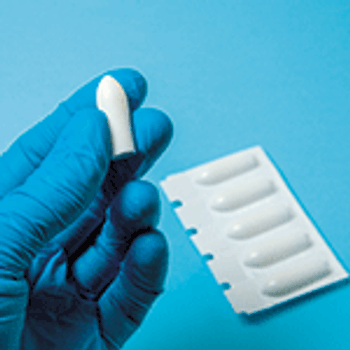
This article demonstrates how qualitative physical attributes testing can be used to characterize soft gel capsule rupture/disintegration during rectal administration.

Early adoption of the right approach to address solubility can deliver significant benefits.

Intellectual challenge, work/life balance, compensation, and an unclear business outlook create uncertainty among European bio/pharma employees.
Pharmaceutical Technology's In the Lab eNewsletter
Integration of two separate chromatography data systems boosts workflow efficiency.

Microbial identity data can be critical for determining contamination sources.

Drawing on practical experience, the authors examine key questions and answers about various aspects relating to the enhanced approach for analytical procedure lifecycle management.
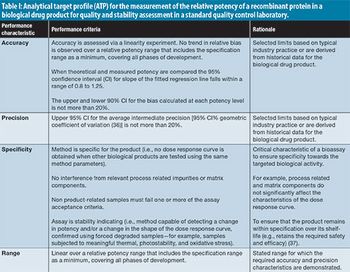
Three hypothetical analytical target profiles (ATPs) are provided, reflecting the current thinking of the the European Federation of Pharmaceutical Industries and Associations Analytical Lifecycle Management Team.