
Equipment and Processing Report
Soft sensors are powerful tools that can be used along with spectroscopic instruments in on-line measurement.
Accurately targeted immunotherapies through reliable neoantigen recognition enable personalized medicine development.

Activation and expansion are essential for success in both autologous and allogeneic therapies.

Continuous manufacturing and a quality-by-design development approach are a natural fit.

Equipment and Processing Report
Soft sensors are powerful tools that can be used along with spectroscopic instruments in on-line measurement.
This three-year partnership will explore and identify new tools and methods to modify and optimize the Chinese hamster ovary (CHO) cell line performance.
The investment will be used to advance Nemaura’s R&D programs, which include liquid vaccines that have been reformulated for administration through the skin using its micropatch drug delivery technology.

Drug manufacturers need to work closely with excipient suppliers to ensure supply chain safety.

More agile techniques are improving the development of multiparticulate drug-delivery systems.
Pharmaceutical Technology Europe
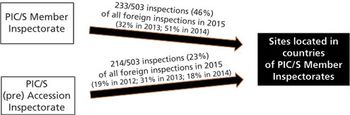
The authors look at challenges and considerations to continuously improve inspection efficiency.

PTSM: Pharmaceutical Technology Sourcing and Management
FDA issued approvals for less than half the number of new drugs in 2016 compared with 2015.
The £14-million research project aims to better understand adverse drug reactions through a variety of modeling approaches.
In a recent deal with the Federal Trade Commission, Endo agreed to refrain from entering into future pay-for-delay agreements for ten years.
Merck will pay a one-time fee of $625 million and additional royalties to BMS and Ono Pharmaceutical to settle the patent infringement case related to Keytruda.
PTSM: Pharmaceutical Technology Sourcing and Management
New website allows access to research quantities of commercial-grade ligands and catalysts.
The partnership will focus on providing practical information to clients on the development of biologics and vaccines.
GEA’s ConsiGma continuous tableting line combined with Siemens’ automation and Sipat data management systems enables continuous manufacturing.

PTSM: Pharmaceutical Technology Sourcing and Management
Alternatives to expensive palladium catalysts are gaining acceptance for commercial API synthesis.
As of mid-December, less than half the number of new drug approvals were issued by FDA in 2016 compared with 2015.

As pharmaceutical quality metrics evolve, they will need to incorporate more of the principles of operational excellence, says consultant Prabir Basu.
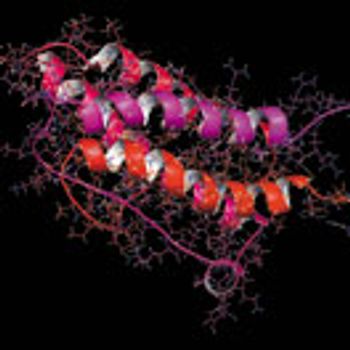
Isothermal titration calorimetry and differential scanning calorimetry are valuable tools that can help accelerate drug development.
PTSM: Pharmaceutical Technology Sourcing and Management
AGC adds second biopharma contract manufacturer with acquisition of CMC Biologics.
A pilot project, beginning in 2017, will support the development of biosimilars.
The companies entered a manufacturing agreement for the future commercial production of Lenti-D and LentiGlobin product candidates.
Oxford Genetics received £1.61 million from Innovate UK to explore computational and synthetic biology approaches for optimized mammalian bioproduction.
PTSM: Pharmaceutical Technology Sourcing and Management
Saneca Pharma has received a EUR1.5 million grant from the Slovak Ministry of Education, Science, Research, and Sport, which will be used to drive forward new R&D initiatives for API manufacturing.

PTSM: Pharmaceutical Technology Sourcing and Management
Previous hesitation by pharma industry to use cocrystals may change with FDA’s new guidance that classifies cocrystals APIs.