


Dalton Pharma Services completed an expansion in sterile filling and API manufacturing at its cGMP facility in Toronto, Canada.
Accurately targeted immunotherapies through reliable neoantigen recognition enable personalized medicine development.
Activation and expansion are essential for success in both autologous and allogeneic therapies.
Continuous manufacturing and a quality-by-design development approach are a natural fit.

Dalton Pharma Services completed an expansion in sterile filling and API manufacturing at its cGMP facility in Toronto, Canada.
Researchers at the Massachusetts Eye and Ear Infirmary developed a potential drug delivery method using a contact lens to deliver glaucoma medication.
The guidance assists in the development, analysis, and presentation of microbiology data during antibacterial drug development.
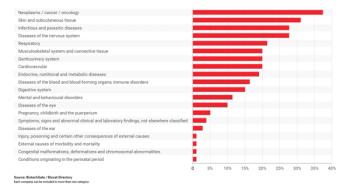
Barcelona is set to host two well-known pharmaceutical events in the upcoming calendar year: CPhI (October 4–6, 2016) and BIO Europe Spring (March 20–22, 2017). The city is the heart of the BioRegion of Catalonia, believed to be the most dynamic bioregion in Spain and one of the most active in Europe.
The legal battle between the Broad institute and UC Berkeley heated up after an email was released from a former graduate student.
PTSM: Pharmaceutical Technology Sourcing and Management
CDMO Alcami adds HPAPI capacity and cryogenic capabilities to its Wisconsin facility.
PTSM: Pharmaceutical Technology Sourcing and Management
Piramal Enterprises has entered into an agreement to acquire 100% stake in Ash Stevens all by cash for a consideration of $42.95 million plus an earn-out consideration capped at $10 million.
Irvine Scientific’s new product range includes chemically-defined, serum-free media, to increase productivity of viral vectors and recombinant proteins in suspension cultures.
PTSM: Pharmaceutical Technology Sourcing and Management
Agilent Technologies announces plans to build a new oligo manufacturing facility in Colorado that will double current capacity.
PTSM: Pharmaceutical Technology Sourcing and Management
The GMP-certified facility will produce TruTag microtags for global pharmaceutical customers.
Topical semi-solids, like creams, lotions and ointments are comprised of a complex mixture of microstructures or colloidal phases, frequently referred to as the Q3. These microstructures may include micelles, lamellar phases, polymer matrices, liquid crystalline and crystalline states of wax excipients, as well as the solid states of active pharmaceutical ingredients. Different topical medicated semi-solid formulations, spanning a range of treatment indications, reveal a variety of different microstructures.
Jacobs Engineering Group was awarded a contract to provide engineering services and procurement for Alnylam Pharmaceuticals’ new manufacturing facility in Norton, Massachusetts.
PTSM: Pharmaceutical Technology Sourcing and Management
Recent research of efficient chiral synthesis technologies reveals potential uses in API manufacturing.
Three-dimensional printing allows unique benefits to be built in to solid-dosage forms.

A technology management process identifies and evaluates new technologies in biopharmaceutical manufacturing to aid business decisions.
A Q&A with FDA to gain insight on FDA's views of three-dimensional printing and its regulation in drug manufacturing.

Industry experts discuss key considerations in the development of orally disintegrating tablets.

Enzymatic catalysis offers pharma manufacturers a way to implement the Principles of Green Chemistry.
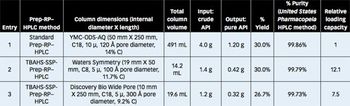
This paper describes a unique Prep-rP-HPLC technique that uses a C-18/C-8 derivatized silica coated with a hydrophobic quaternary ammonium salt or quaternary phosphonium salt that acts as an additional/surrogate stationary phase (AsP/ssP).

Conventional limit-setting techniques are not health-based and can make risk assessment more difficult.
The success of a pharmaceutical manufacturing transfer from one facility to another requires detailed operational plans, attention to detail, and coordination between all parties. \

Bio/pharmaceutical contract service provides continue to invest in development, facility upgrades, technological advancement, and mergers and acquisitions.
Multiple methods are required for detecting and removing protein impurities.
A new era has begun to address the deadly innovation gap in tackling the antimicrobial resistance crisis.