Formulation and Drug Delivery

Latest News


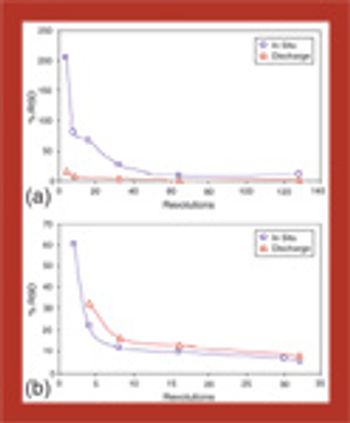
This article reflects on the challenges that predicting powder flowability currently pose to the pharmaceutical manufacturing industry and considers some of the benefits that can accrue when companies overcome these issues.

Erythritol is a bulk sweetener polyol that is suitable for a variety of reduced-calorie and sugar-free foods. It has been part of the human diet for thousands of years because of its presence in foods such as fruit, mushrooms and fermentation-derived products including wine, soy sauce and cheese. This article investigates the properties of erythritol and describes how it can be used as a pharmaceutical excipient.

Sterilizing grade filters are widely used in the biopharmaceutical industry and were once thought of as being perfect. However, these filters have experienced rapid developments and improvements during the last decade, which have resulted in enhanced thermal and mechanical resistance. Moreover, their performance levels have been raised, which has led to significant cost savings within production processes.

Medicines and excipients are inseparable, with few exceptions - one cannot exist without the other. The Pharmaceutical Quality Group and other international bodies have developed good manufacturing practice (GMP) standards and guidelines to facilitate the effective supply of excipients. This article discusses the definition and significance of excipients, and highlights the importance of implementing the correct excipient manufacturing controls and standards.

Ultrafiltration is a pressure-driven membrane filtering process used to separate and/or purify dissolved or suspended particles from water and other liquids. Recent advances in materials and membrane manufacturing techniques have led to ultrafiltration playing a pivotal role in a number of biopharmaceutical processes, including protein concentration and blood for actionation. This article examines the criteria that should be considered when selecting membranes for such applications.

Using melt extrusion to prepare glass solutions of poorly water-soluble drugs with hydrophilic excipients offers an exciting and advantageous alternative to existing formulation methods such as spray-drying and co-melting. Investigating potential methods to increase water solubility begins early in drug development. Techniques described in this paper show how only a small quantity of drug can be used to determine its suitability for melt extrusion, allowing the method to be considered at the same time as salt screening and particle size reduction work, and could speed up the formulation process.