


Brief pharmaceutical news items for June 2008.
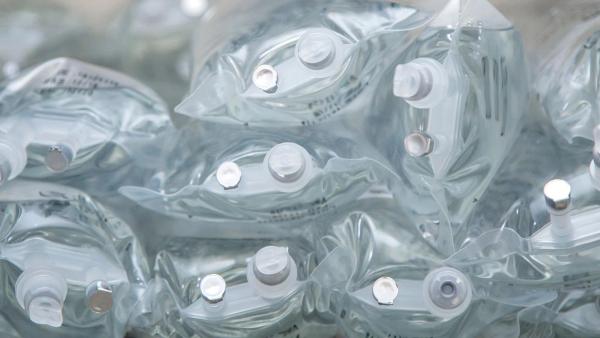
The evolution of therapeutic modalities drives the adoption of single-use technologies.
Despite its understandable hesitancy, the pharma industry is facing a need for more widespread adoption of cloud-based solutions.

Given the criticality of fill/finish processes, it is clear that automation is the next technological step.
Brief pharmaceutical news items for June 2008.

The author provides an overview of key regulatory issues facing companies seeking to market their biopharmaceutical agents globally.

Risk management, and its benefits for patients, plays a big role at the PDA Annual Meeting.
Creating a kinder, gentler manufacturing process that doesn't kill the product is the goal of process developers doing large-scale cell culture for cell therapy.

Editors' Picks of Pharmaceutical Science & Technology Innovations
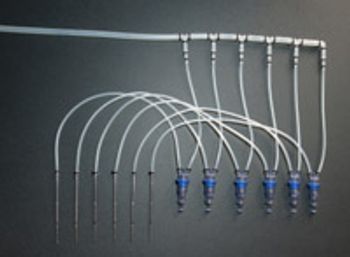
New products for sterile filling, quality control, and anticounterfeiting measures gained notice.

Nanoparticle-based systems present many advantages for the delivery of current and emerging biological drugs.

With rising drug deveopment costs and burdensome clinical trials, Indian-based firms are transferring their research departments to other entities in hopes of saving cash, mitigating risk, and ultimately, buying back the rewards.
The authors focus on how single-use systems effectively control three potential sources of common contamination: cross contamination, microbial contamination and biologic contamination of the process facility.

Letting the public inside the drug development process may increase their faith in what we do.
Although the spotlight is now on nanoparticulate delivery for biologicals, other strategies have proven successful.

The good, the bad, and the ugly about direct-to-consumer advertising.

Scientists are uncovering signaling systems that operate via cannabinoid messenger molecules.
Pharmaceutical Technology Europe
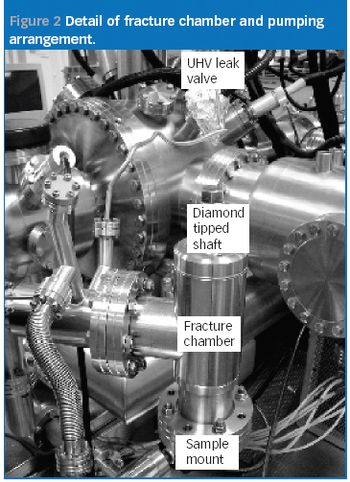
Our oral pharmaceutical product is packaged by a range of contract packaging companies. Adverse properties of the final packaged product from one particular company indicate that the product shelf life is shorter than it should be. It has been suggested that this could be related to gas filling issues. Is this anything that surface analysis could clarify?
Pharmaceutical Technology Europe
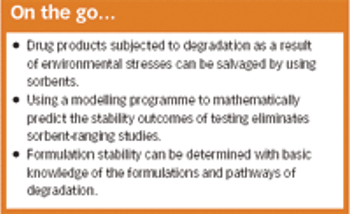
Drug products subjected to degradation because of environmental stresses can be salvaged if proper packaging and protection is provided by sorbents.
ePT--the Electronic Newsletter of Pharmaceutical Technology
The US Senate approved a measure (HR 2642) that would provide the US Food and Drug Administration with $275 million in additional funding under a supplemental appropriations bill. The measure now goes before the House.
ePT--the Electronic Newsletter of Pharmaceutical Technology
Also, GVK BIO and Wyeth Pharmaceuticals form research agreement, Eli Lilly announces changes to management, more...
ePT--the Electronic Newsletter of Pharmaceutical Technology
In a white paper published today, the US Food and Drug Administration described its Sentinel Initiative to create an electronic safety system that tracks drug performance.
ePT--the Electronic Newsletter of Pharmaceutical Technology
Cambridge Consultants is developing a low-cost portable instrument to test respiratory drug-delivery devices.
ePT--the Electronic Newsletter of Pharmaceutical Technology
The Committee on Oversight and Government Reform held a hearing on whether the US Food and Drug Administration's drug and medical device regulation bar state liability claims.
ePT--the Electronic Newsletter of Pharmaceutical Technology
The European Federation of Pharmaceutical Industries and Associations (EFPIA), the trade association representing European pharmaceutical manufacturers, issued recommendations to the public consultation launched in March by the European Commission's proposed drug anticounterfeiting measures. EFPIA's proposal includes a ban on drug repackaging.
ePT--the Electronic Newsletter of Pharmaceutical Technology
Also, Pfizer to close Indiana "Exubera" facility, executive appointments at Patheon, more...
ePT--the Electronic Newsletter of Pharmaceutical Technology
The devastating May 12 earthquake that struck the Wen Chuan Sichuan province of China left tens of thousands dead, homes and businesses destroyed, and survivors without basic human needs such as shelter, food, and medicines. The quake also had a significant impact on the local industries of the region. Pharmaceutical companies located within the affected areas are assessing possible damage to facilities and loss of personnel.
Equipment and Processing Report
PharmTech's monthly newsletter, reviews the Editor's Picks for the May 2008 edition: Watson-Marlow Flexicon and HealthStar
Equipment and Processing Report
Controlling modular, self-contained process skids (known as plug-and-play components) with an automation system can increase a pharmaceutical manufacturing facility?s flexibility.