
ePT--the Electronic Newsletter of Pharmaceutical Technology
Bothell, WA (December 12)?If the shareholders of biotechnology company Icos Corp. approve a proposed buyout by Eli Lilly and Co., all of Icos?s 700 employees will lose their jobs.
The evolution of therapeutic modalities drives the adoption of single-use technologies.

Despite its understandable hesitancy, the pharma industry is facing a need for more widespread adoption of cloud-based solutions.

Given the criticality of fill/finish processes, it is clear that automation is the next technological step.

ePT--the Electronic Newsletter of Pharmaceutical Technology
Bothell, WA (December 12)?If the shareholders of biotechnology company Icos Corp. approve a proposed buyout by Eli Lilly and Co., all of Icos?s 700 employees will lose their jobs.
ePT--the Electronic Newsletter of Pharmaceutical Technology
Princeton, NJ (Nov. 30)-Rockwood Holdings, Inc. agreed to sell its Group Novasep subsidiary for EUR 425 million ($567 million) to a consortium of buyers consisting of Glide Buyout Partners BV, Banexi Capital, and Group Novasep management.
ePT--the Electronic Newsletter of Pharmaceutical Technology
Whitehouse Station, NJ, (Dec. 6)-Merck & Co., Inc. expects the initial phase of its cost-reduction program, first announced in 2005, to yield cumulative pretax savings of $4.5?5.0 billion from 2006 through 2010, with roughly $2 billion of that coming from implementing its manufacturing supply strategy.
ePT--the Electronic Newsletter of Pharmaceutical Technology
Dublin, OH (Nov. 30)-Cardinal Health has announced plans to divest its Pharmaceutical Technologies and Services (PTS) segment, "a business that manufactures or packages 100 billion doses of medication every year for pharmaceutical and biotech firms, employs approximately 10,000 at more than 30 facilities worldwide and generates $1.8 billion in revenue," according to a company statement.
ePT--the Electronic Newsletter of Pharmaceutical Technology
London (Dec. 8)-GlaxoSmithKline PLC agreed to acquire Domantis Ltd., a developer of antibodies for £230 million ($454 million) in cash.
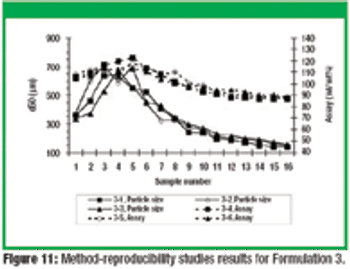
This article describes the design and development of a material-sparing fluidization segregation tester for use with pharmaceutical powders. This tester offers several improvements over the current ASTM standardized test practice. Less than 20 mL of material is required to characterize the fluidization segregation potential of a sample. Features of the tester include powder containment for potent compounds, in-process monitoring of the fluidization conditions, and sample retrieval without the need for subsampling or riffling for typical analyses.
Brand-name manufacturers seek to protect their products.
Pharmaceutical Technology Europe
Why do the biotech ventures mange to have such promising drug candidates while pharmaceutical R&D is facing a drug deficit?
Pharmaceutical Technology Europe
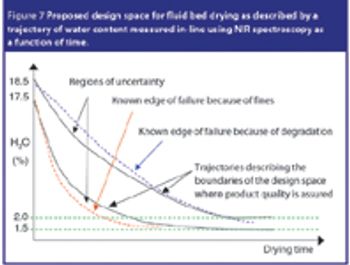
EFPIA's 'Mock P.2' document aims to show how the role of 'quality risk management' and process analytical technology as an enabler for quality by design can be presented in a common technical document format. This article summarizes the main features of this document, and explains the key concepts and principles used.
Crucell announces acquisition of SBL Vaccin AB
ePT--the Electronic Newsletter of Pharmaceutical Technology
London (Nov. 22)-The European Medicines Agency reports a defect in some vials of Herceptin (trastuzumab), the anticancer treatment by Roche, which have been distributed in Europe. As a result, The EMEA's Committee for Medicinal Products for Human Use outlined a plan, formulated in conjunction with Roche, for the visually reinspecting and replacing defective vials.
ePT--the Electronic Newsletter of Pharmaceutical Technology
Basel, Switzerland (Nov. 17)-Novartis plans to submit additional information to the Committee for Medicinal Products for Human Use (CHMP) of the European Medicines Agency on manufacturing issues to support the approval of its antifungal drug "Mycograb." The CHMP issued a negative recommendation for the drug.
ePT--the Electronic Newsletter of Pharmaceutical Technology
Argonne, IL (Nov. 9)-Researchers from Argonne National Laboratory?s Chemistry Division and Xradia have developed a novel X-ray microscopy technique that allows molecular observations of the reactivity of solid surfaces at the nanometer scale, including interfacial reactions such as ion adsorption and catalytic reactions.
ePT--the Electronic Newsletter of Pharmaceutical Technology
Washington, DC (Nov. 20)-The US Department of Health and Human Services awarded contracts totaling $199.45 million to Sanofi Pasteur, Novartis, and GlaxoSmithKline PLC to manufacture 5.3 million 90-?g doses of influenza vaccine designed to protect against the H5N1 influenza virus strain.
ePT--the Electronic Newsletter of Pharmaceutical Technology
Alcan, China Biopharma, US FDA, MedImmune, more
ePT--the Electronic Newsletter of Pharmaceutical Technology
Leverkusen, Germany (Nov. 9)?Bayer AG outlined its strategy for integrating Schering AG (Berlin) into the newly formed company, Bayer Schering Pharma. These moves follow Bayer's acquisition of Schering AG earlier this year.
ePT--the Electronic Newsletter of Pharmaceutical Technology
Over-the-counter drug maker Perrigo Company issued a voluntary recall of certain lots of store-brand acetaminophen 500-mg caplets that could contain trace amounts of metal particulate. Approximately 11 million bottles of acetaminophen are affected by the recall.
ePT--the Electronic Newsletter of Pharmaceutical Technology
South San Francisco, CA (Nov. 9)?Genentech, Inc. has agreed to acquire Tanox, Inc., for $20 per share, a total cash value of roughly $919 million. Tanox is a biotechnology company specializing in the discovery and development of biotherapeutics based on monoclonal antibody technology.
ePT--the Electronic Newsletter of Pharmaceutical Technology
Mystic, CT (Oct. 26)-Kenneth G. Chapman died at his home here on Oct. 26. He was 79. The cause was pancreatic cancer
ePT--the Electronic Newsletter of Pharmaceutical Technology
Research Triangle Park, NC (Nov. 13)-Eisai Inc. broke ground here for a new pharmaceutical production and formulation research and development facility for parenteral oncology drugs.
ePT--the Electronic Newsletter of Pharmaceutical Technology
AAPS, San Antonio (Oct. 31-The advantages of ultra-performance liquid chromatography over traditional high-performance liquid chromatographic were the center of the presentation, ?Strategies for Rapid Chromatographic Method Development from Preclinical to Phase 3,? by Charanjeet Jassal of Wyeth Pharmaceuticals.
ePT--the Electronic Newsletter of Pharmaceutical Technology
Geneva, Switzerland (Oct. 23)-Aiming to increase capacity for producing influenza pandemic vaccines, the World Health Organization has identified strategies and practical solutions for reducing the anticipated gap in the global vaccine supply.
ePT--the Electronic Newsletter of Pharmaceutical Technology
Dublin, Ireland (Nov. 6)-Merck Sharp & Dohme (Ireland) Ltd., a wholly owned subsidiary of Merck & Co, Inc. plans to establish a formulation-research-and-development and manufacturing facility at its plant in Ballydine, Ireland, according to the Industrial Development Agency Ireland.
ePT--the Electronic Newsletter of Pharmaceutical Technology
Akorn, Natco, Illumigen, Avecia
ePT--the Electronic Newsletter of Pharmaceutical Technology
AAPS, San Antonio (Oct. 31)-Industry and regulatory agency concerns over process variability have prompted both groups to take a closer look at analytical method transfer processes.