


Manufacturing

Latest News


Review of SUT Adoption in Biopharma Manufacturing

The evolution of therapeutic modalities drives the adoption of single-use technologies.

Review of SUT Adoption in Biopharma Manufacturing

Why Are Pharmaceutical Companies Reluctant to Adopt Cloud Technologies?

Despite its understandable hesitancy, the pharma industry is facing a need for more widespread adoption of cloud-based solutions.

Why Are Pharmaceutical Companies Reluctant to Adopt Cloud Technologies?

Automating the Future of Fill/Finish

Given the criticality of fill/finish processes, it is clear that automation is the next technological step.

 Automating the Future of Fill/Finish

i1-283904-1408688490697.jpg

Solid oral drug products are one of the oldest of all manufactured dosage forms (1). Today, the development of an appropriate formulation of drug and excipients and of an effective manufacturing process to create a tablet or capsule is slowly transforming from a practice of applied art to one of applied science. The US Food and Drug Administration supports this change by expecting sponsors of new drug applications to understand, describe, and control materials and processes as well as the risks associated with drug product manufacturing (2). These steps will ensure the consistent production of products that meet their specifications and remain safe and effective during their shelf life.

The process analytical technology (PAT) initiative has been percolating at the US Food and Drug Administration for a long time, explained FDA's John E. Simmons at the AAPS Annual Meeting and Exposition on Wednesday. "If you think of PAT as an isolated set of applications, I think you are missing the point," Simmons said. "The FDA would like PAT to become commonplace?not to be an initiative, but common practice."

bose-197083-1408689346449.gif

Generally, tablet and capsule film coatings are applied as aqueous or organic-based polymer solutions or dispersions, graduate student Sagarika Bose (University of Connecticut) explained during her Tuesday AAPS Graduate Student Symposium presentation, "Development and Evaluation of Solventless Photocurable Pharmaceutical Film Coating." However, organic film coatings can be flammable, toxic, and must comply with strict environmental regulations. Aqueous film coating can lead to the degradation of certain drugs by heat and water.

At the plenary session at the AAPS Annual Meeting, two researchers presented studies targeting completely different areas of stem cell research, but their work focused on the same ultimate goal: finding new therapies.

"In my experience, you can generally tell where a person stands on the issue by the example he gives," said Art Mlodozeniec, PhD, a panelist at the Nov. 7 roundtable on follow-on biologics at the AAPS Annual Meeting in Nashville, Tennessee. "If he brings up human growth hormone and says the processes and impurities are easy to control, he's from the generic industry and supports approval for follow-on biologics. If he brings up the challenge of of erythropoeitin, he's from the innovator industry and opposes generics."

solo-196888-1408689512945.gif

When it comes to developing a robust lyophilization process, formulators can "pay now or pay later," says Jeff Schwegman, PhD, founder and chief scientific officer for BioConvergence. Because 30% of new drugs in clinical trials are biotech-based therapeutics (compared with 7% 10 years ago), more than ever, the US Food and Drug Administration is paying close attention to lyophilization data and questioning pharmaceutical companies about their development cycles, especially cycle development transfer, shelf-temperature mapping, dryer-to-dryer comparison studies, formulation time, process validation, and cycle deviation. Consequently, this is pushing formulators to optimize formulation variables, conduct additional testing during early-stage development, and understanding critical process parameters, equipment qualifications, and manufacturing conditions that can influence formulation behavior at a large scale. Not taking the time or effort to achieve these goals during early development could lead to redundancies in formulation work - a reality observed too often in today's practices.

Thermo Electron (Waltham, MA, www.thermo.com) debuted the "LCQUAN 2.5" data-acquisition system at the AAPS Annual Meeting and Exposition on Monday. The new system expands the software offerings for the company's "Finnigan TSQ Quantum" series of triple quadrupole mass spectrometers.

reagan-196660-1408689788138.gif

"We must add our light to the sum of lights," declared Ron Reagan in his Nov. 6 keynote address to the 2005 Annual Meeting of the American Association of Pharmaceutical Scientists. He was quoting Billy Kwan, the half-Indonesian, half-Australian photojournalist of divided loyalties in the 1982 film, "The Year of Living Dangerously," a character who redeems himself by taking bold action in the face of moral crisis. Reagan encouraged the audience to take similar action to defend science, which he said is currently subordinated to political convenience.

i3-190342-1408684304532.gif

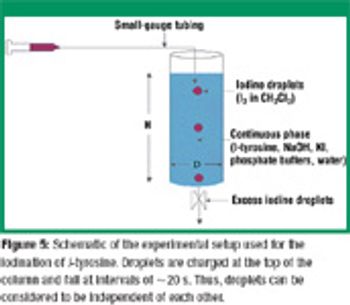
Making active pharmaceutical ingredients (APIs) requires long chains of chemical reactions and large quantities of solvents. Ask API manufacturers how they'd like to improve this process, and the responses are likely to be "make the reactions faster," "make the reactions cheaper," or "make the reactions more efficient." Then after all these economically driven answers, you might here, "make the reactions more environmentally friendly."

i4-190346-1408684293394.gif

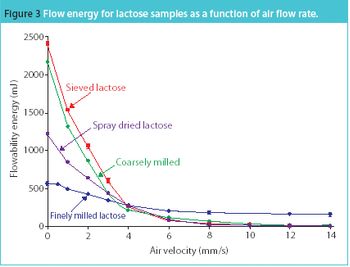
The common crystal form of ibuprofen was changed to optimize processing and manufacturing properties. Six modified crystal forms were prepared and assessed for dissolution, morphology, particle size, density, thermal characteristics, powder x-ray diffractometry, flow properties, and tabletability.