
The draft guidance document clarifies chemistry, manufacturing, and controls information for marketing applications.
The draft guidance document clarifies chemistry, manufacturing, and controls information for marketing applications.
New guidance complements ICH guidelines on impurities.
While biotech will revolutionize our industry through new products and new reaction pathways, process analytics is the link between process automation and the laboratory sector, and water plays a key role as a valuable resource all over the world.
Eight physician groups wrote to the commissioner of FDA to stress the importance of transparency in biosimilar labeling to decrease prescribing risks.
Boehringer Ingelheim announces FDA approval of Stiolto Respimat inhaler for the treatment of COPD.
Pharmaceutical Technology spoke with Tim Kearns, pharmaceutical and medical devices manager at Videojet.
The House Energy and Commerce Committee gave unanimous approval to the landmark 21st Century Cures Act reform bill on May 21, 2015.

Equipment and Processing Report
Optical inspection equipment for packaging was displayed at INTERPHEX 2015.
The new guideline replaces the previous version-CHMP/EWP/240/95 Revision 1.
The former New England Compounding Center will pay $200 million to victims and creditors for the 2012 outbreak of meningitis that killed 64.
Raplixa fibrin sealant, the first approved spray-dried biologic, is a hemostatic agent that helps control bleeding from small blood vessels during surgery.
FDA concludes Orkambi demonstrates a clinical benefit over placebo, but questions the magnitude of the improvement.
Pluristem Therapeutics announces that Japan’s Pharmaceuticals and Medical Devices Agency agreed with its methods for the manufacture of PLX-PAD cells.
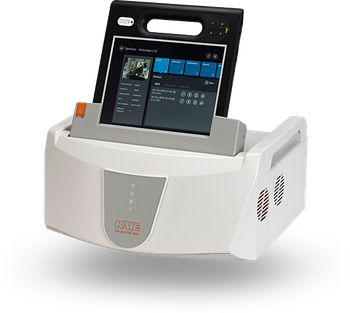
The new Kaye Validator AVS combines accurate sensor measurements with all GMP requirements for calibration and traceability.
The agency publishes draft guidance answering industry questions about the Biologics Price Competition and Innovation Act.
FDA issues a Form 483 following inspection of Impax Laboratories' Hayward, CA facility.

The basic principle behind QbD is that quality should be built into a product with an understanding of the product and process by which it is developed and manufactured along with a knowledge of the risks involved in manufacturing the product and how best to mitigate those risks.
Novartis announces that its lung cancer drug, Zykadia, gained European Union approval.
Johnson & Johnson announces partnership with NYU School of Medicine to launch a compassionate care committee for individual patient requests of investigational drugs.
The US Court of Appeals granted Amgen’s request to block Novartis’ Neupogen biosimilar, Zarxio, from the US market until the court resolves litigation between the two companies.
The company voluntarily recalls select lots of Adrucil due to particulate matter.
PTSM: Pharmaceutical Technology Sourcing and Management
FDA cites Yunnan Hande Bio-Tech for cGMP violations related to data collection and security.
Siegfried Schmitt, principal consultant, PAREXEL, discusses how to keep up with changing regulations.
The European Pharmacopoeia defines the format and content of monographs for biologicals to keep pace with recent approaches and meet the needs of its users.

Compliance with the new traceability requirements necessitates an understanding of how and when to begin implementing changes in an ever-evolving industry.