

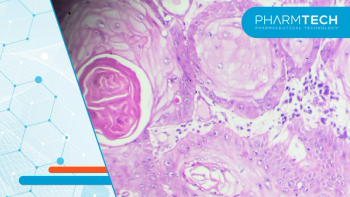
The FDA grants accelerated approval to subcutaneous amivantamab for head and neck cancer, extending the IV-to-subcutaneous shift in biologics formulation.
The FDA grants accelerated approval to subcutaneous amivantamab for head and neck cancer, extending the IV-to-subcutaneous shift in biologics formulation.

USP data show fewer US drug shortages but longer ones, averaging 5+ years. Drug shortages are an incentive problem, not a manufacturing mystery.

Boehringer, AbbVie, ASKA, and Evommune license ADC, IBD, thyroid eye disease, and degrader assets, raising tech transfer demands for manufacturers.
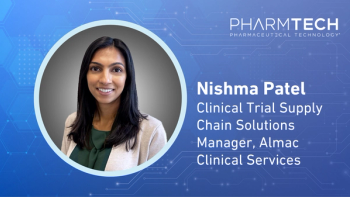
Almac Clinical Services’ clinical supply strategy won the 2026 CPHI Award for Supply Chain Excellence. Nishma Patel, supply chain solutions manager, explains the benefits and challenges of the company’s just-in-time manufacturing solution.
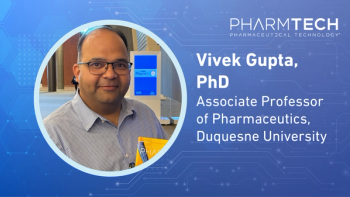
Vivek Gupta of Duquesne University explains at AAPS PharmSci 360 why device decisions can't wait and why excipient makers must test beyond drug molecules.
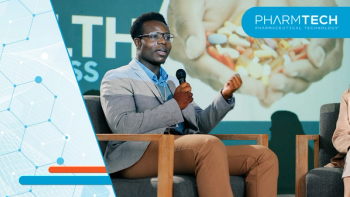
Industry subject matter experts spoke about the challenges of turning complex molecules into medicines patients can reliably use.

The pharmaceutical supply chain is a complex system with high stakes. USP provides insights on how it is helping industry navigate global disruptions and procurement issues.

Jaenisch, Muraru, and Pandey discuss how regulators will audit pharma against its own AI policies and ways QA and regulatory teams can build defensible, inspection-ready AI practices.

Impurity deficiencies in submissions are remarkably consistent. Subathra Ramamoorthy, Veranova, explains how to catch them before agency filing.
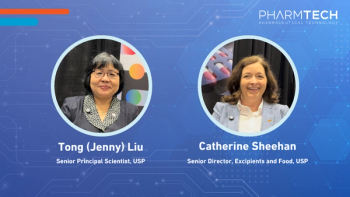
USP’s Sheehan and Liu talk at AAPS PharmSci 360 abou getting novel excipients past the monograph hurdle through early engagement with FDA.

CDMOs announced expansions, exhibitors showcased automated equipment, and supply chain strategy discussions were a focus at CPHI Milan 2026.

Mitigating nitrosamine risk requires assessing each product individually and chasing zero nitrite in pharmaceutical excipients is often impractical and costly.
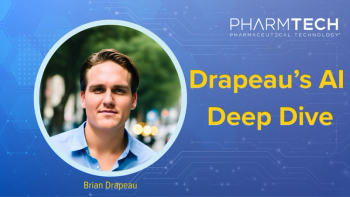
The business case for regulated AI turns on the cost of producing an outcome that the quality system can accept.
In October, FDA reorganized rare disease development around a fit-for-purpose framework and a new pathway for individualized gene editing. Regulators in Europe and the UK set out long-term plans for clinical trials, AI, and moving away from animal testing.

Clinical, manufacturing, safety, and commercial teams all lean on shared data. They need to agree on who publishes each data product, who can use it, and what evidence goes with it.
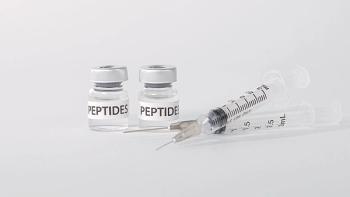
Structural modifications can improve peptide stability, solubility, and absorption to enable effective oral delivery.

The FDA approves VOCERYQ, the first DNA medicine, for RRP surgery reduction, raising plasmid, drug-device, and confirmatory trial manufacturing demands.

Continuous overall equipment effectiveness can be used to pinpoint hidden downtime and process bottlenecks in real time.
Subathra Ramamoorthy, Veranova, on how forced degradation and trace impurity profiling in potent APIs shape regulator-ready analytical methods.

The PharmTech team focused on its coverage of AAPS PharmSci 360 this week, conducting interviews with experts on a range of topics including formulation platforms, AI, amorphous solid dispersions, and animal studies.
Subathra Ramamoorthy, Veranova, on when to escalate to structural elucidation and pair orthogonal techniques when characterizing an impurity.
Manish Baviskar, Hubot CDMO, on ALCOA++ data integrity, model version change control, continuous monitoring, and human sign-off.
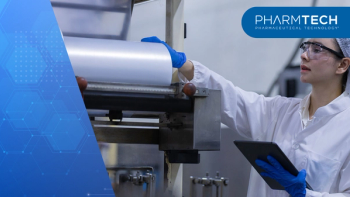
The agreement between CDER and OII with allow for coordinated marketing application assessments and inspections.
Manish Baviskar, Hubot CDMO, explains which AI skills validation engineers need first and why AI model updates must go through GMP change control.
Ron Filler, Drug Development Consultants, explains how USP's 1074 revision brings human-relevant safety science to formulators and excipient makers.
Nitin Kumar Swarnakar, PhD, global application lab manager at BASF, talks about spray drying for drying amorphous solid dispersions and Raman spectroscopy’s role as a quantitative analytical tool.
Aleksandra Zuraw, senior veterinary pathologist at Charles River, discusses how chain of custody, good laboratory practice, quality control, and validation are applied to digital pathology data used in drug development.
Ron Filler, Drug Development Consultants, explains how USP's 1074 revision brings human-relevant safety science to formulators and excipient makers.
Nitin Kumar Swarnakar, PhD, global application lab manager at BASF in Tarrytown, spoke with PharmTech at AAPS PharmSci 360 about formulation and characterization challenges for amorphous solid dispersions.

FDA draft guidance on individualized genome editing lets BLAs add patient-specific variants without new trials, shifting evidence to CMC assay data.