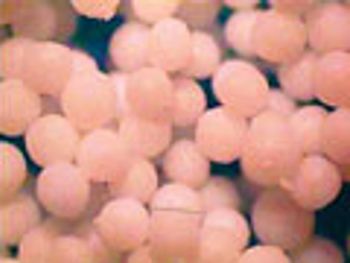
The extended-release performance of drug-loaded pellets manufactured by two methods, drug layering and direct pelletization, was compared.
The extended-release performance of drug-loaded pellets manufactured by two methods, drug layering and direct pelletization, was compared.
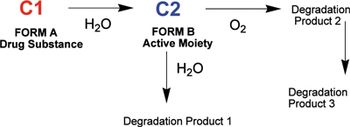
In this article, the authors demonstrate that a normal-phase chromatographic method was stability-indicating for a water-sensitive prodrug. The stress conditions using aqueous and non-aqueous conditions were also compared to understand the information obtained with each approach.
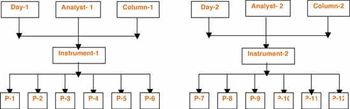
The authors describe the development of a stability-indicating reverse-phase high-performance liquid chromatographic (RP?HPLC) method for the quantitative determination of potential genotoxic impurities present in pemetrexed disodium (form-IV). The chromatographic separation was achieved on a RP?HPLC column (Zorbax SB-Phenyl, Agilent) at ambient temperature with gradient elution using mobile phase A (trifluoroacetic acid [TFA] in water) and mobile phase B (TFA in acetonitrile).

Different approaches for qualification of personnel for visual inspection of residues on equipment surfaces are reviewed.

The industry lacks an accepted method for establishing a minimum incubation time (MIT) of less than seven days for biological indicators (BIs). The authors propose an MIT method that provides a means for reproducible determination of BI grow-out time.

Predicting long-term storage stability of a given protein and formulation is desirable for effective screening and optimization early in the development process. Multiple routes to aggregation during storage to suggest that multiple measurement types should be made to probe different aspects of protein behavior.
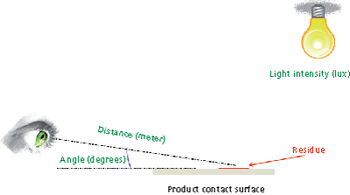
The authors evaluated a variety of materials of construction (MOCs) and found that visible residue limits (VRLs) were higher on some MOCs than on stainless steel. The optimal viewing conditions were dependent on the MOC and the viewing background. The risk of a cleaning failure due to visual failure for different MOCs can be mitigated or eliminated using complementary cleaning validation studies.

The authors discuss a strategy for developing a risk-based approach for testing of elemental impurities in leachable studies.
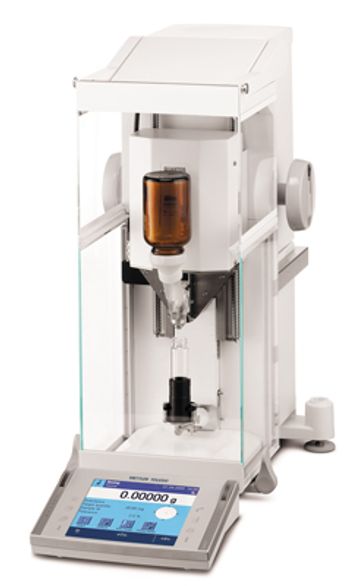
The advantages of using an automated powder dispensing system in a ventilated balance enclosure for efficient handling and effective containment of potent compounds are discussed.
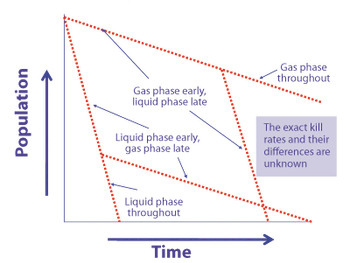
Vaporous hydrogen peroxide, used for sterilization and decontamination, is highly potent but presents implementation challenges.
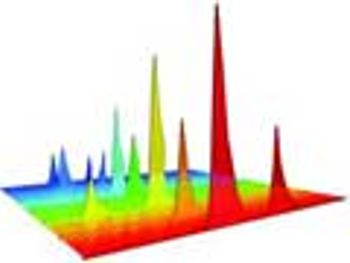
The authors examine alternative solvents for extractables and leachables screening evaluation of process components that provide extraction equivalence and do not interfere chromatographically.

The author discusses the purpose of analysis and testing and the implications for specifications and their underlying statistical distribution.
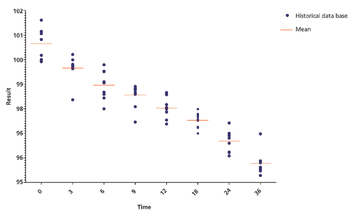
The authors discuss three methods for identification of out-of-trend (OOT) results and further compare the z-score method and the tolerance interval in OOT analysis for stability studies.
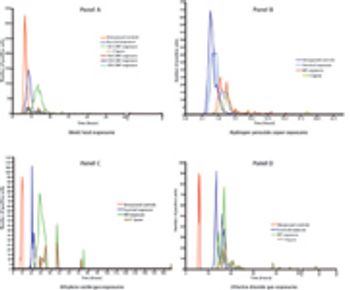
The authors report on the range and distribution of grow-out times for biological indicators exposed to sublethal sterilization processes.
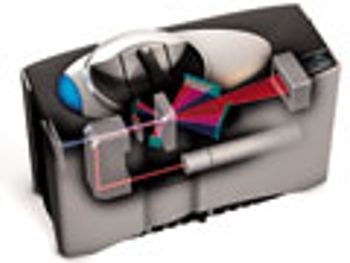
The author examines dry dispersion and outlines the related analytical method development.
The author provides a review of FDA's guidance document, Guidance for Industry: Q11 Development and Manufacture of Drug Substances, and its relation to the International Conference on Harmonization's Q11 document and its application to the industry.
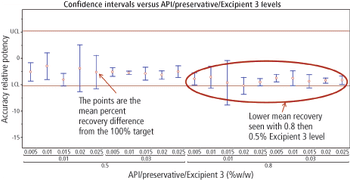
The authors describe a method-validation-by-design (MVbD) approach to validate a method over a range of formulations using both design-of-experiment and quality-by-design principles to define a design space that allows for formulation changes without revalidation.

The miniaturization of preclinical safety assessment studies using a microfluidic chip system and optical microscopy can help reduce compound requirements, time, and costs in formulation development.
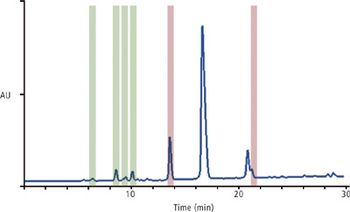
The authors demonstrate that using supercritical fluid chromatography offers distinct advantages in speed and in clean isolation of the desired peaks.
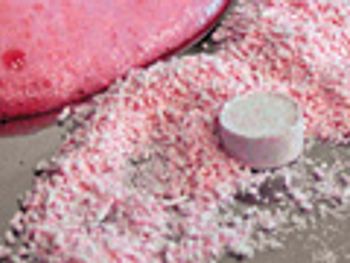
The authors review developments in wet granulation using a twin-screw extruder.

The minimum amount of residue that can be visually detected is demonstrated for a small number of active pharmaceutical ingredients (APIs) on a range of different surface materials.

Even in an industry in which all product development is complicated by the intricacies of human biology, orally inhaled products (OIP) stand out as singularly demanding.

The authors discuss the valuable information that can be obtained from indexing and its applications in routine screening and analysis of solid forms.

GlaxoSmithKline recently developed a novel technology for the formulation of modified-release tablets. The authors describe the route from development to commercialization.

This article introduces"mean kinetic relative humidity" for evaluating the impact of humidity variability.

Managing risk in biopharmaceutical operations is of utmost importance for patient protection.
The authors describe how traditional approaches to analytical method and validation may benefit from alignment with quality-by-design concepts.

The authors examine the use of various grades of direct-compression mannitol in direct-compression tableting process to evaluate the content uniformity of micronized APIs and excipients in a solid-dosage formulation.
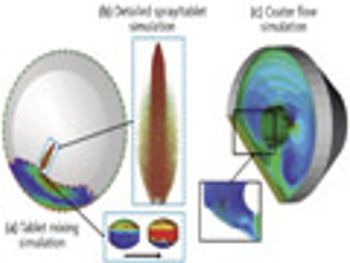
The authors investigate the tablet-coating process using a combination of different simulation techniques.
The authors compare direct combustion with rinse and swab sampling methods.