


A proposed new guideline provides a global policy for limiting metal impurities qualitatively and quantitatively in drug products and ingredients.
There is a great need for sensitive, precise, and easily accessible analytical detection techniques for protein sequencing.

The emergence of mRNA vaccines and cell and gene therapies has pushed innovation in analytical methods.
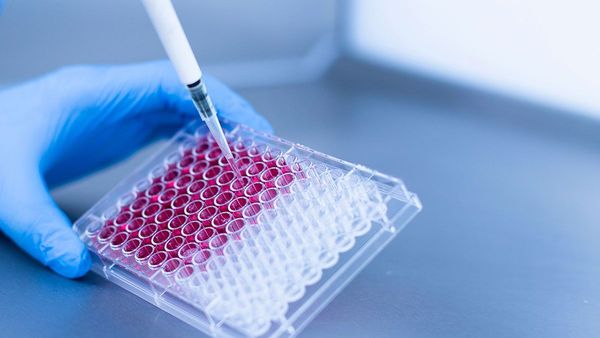
Effective analytics will eliminate failures, deviations, and non-conformances.

A proposed new guideline provides a global policy for limiting metal impurities qualitatively and quantitatively in drug products and ingredients.

Extensive comparability testing is required to ensure that biosimilars have comparable profiles to their reference products.
The authors examine alternative solvents for extractables and leachables screening evaluation of process components that provide extraction equivalence and do not interfere chromatographically.
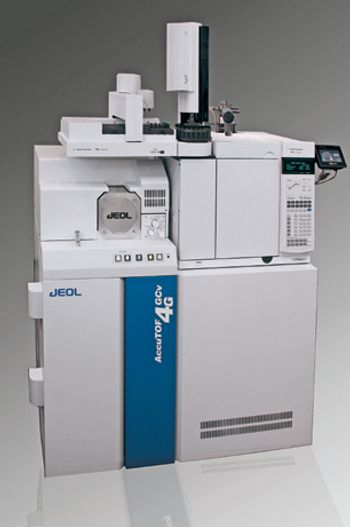
Editor's Pick's of Pharmaceutical Science & Technology Innovations: The latest in analytical instrumentation including mass spectrometers, calorimeters, and viscometers.
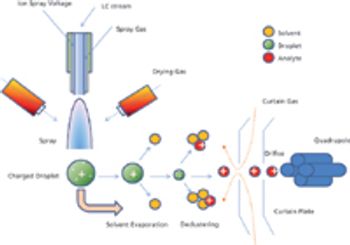
The author describes how liquid chromatography-mass spectrometry works and explains some of its advantages and disadvantages, particularly compared to high-performance liquid chromatography.

View companies' outsourcing profiles from PharmTech's 2013 Outsourcing Resources Fast Locator Index in the following categories.
Michael Rooney, director, bioanalytical development at Jazz Pharmaceuticals, provides an overview of a life cycle strategy for analytical methods development, the need for standards and guidance documents, and therole Quality by Design can play in method development.
For both small- and large-molecule applications, advances in mass spectrometry are leading to interest in this technique as an alternative to liquid chromatography.
The authors describe the use of convergence chromatography combined with mass spectrometry for impurity profiling.
The authors describe two applications of a modified mass-spectrometry (MS) method, multiple reaction monitoring (MRM-MS), in biopharmaceutical analysis.
This article presents the successful analysis of metabolic products from microsomal incubations of a common pharmaceutical compound.
The authors discuss the development of a simple, sensitive, and universal platform for identification and quantification of trace-level protein impurities in biotherapeutics.
The authors present an analysis of ibuprofen based on United States Pharmacopeia General Chapter “Chromatography” using high-performance liquid chromatography.
The authors describe how a combination of imaging techniques can be used to provide topographic and chemical information to characterize a sample.

The author discusses the purpose of analysis and testing and the implications for specifications and their underlying statistical distribution.
Understanding the supply-chain challenge and coupling high-efficiency chromatographic techniques with information-rich detectors are leading to improvements in the management of extractables and leachables in parenteral drugs.
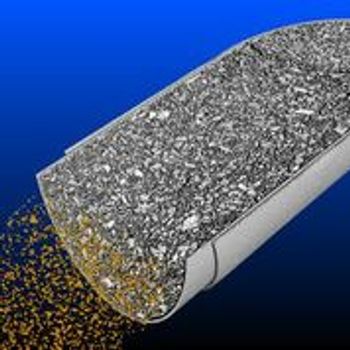
Greater sophistication in 3D X-ray imaging technology raises its utility for QA/QC in manufacturing.
Agilent Technologies Inc. introduced the MassHunter BioConfirm application, which allows users to rapidly create targeted screening methods.
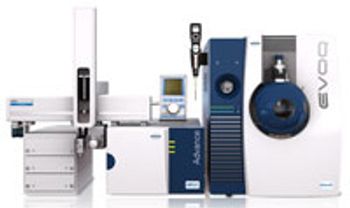
Bruker Chemical and Applied Markets offers three LC-triple quadrupole (LC-TQ) mass spectrometers, the EVOQ Qube, the EVOQ Elite, and the EVOQ Elite ER.
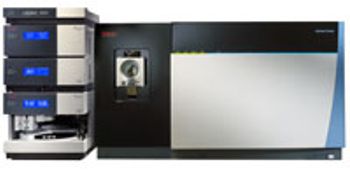
Thermo Fisher Scientific Inc. introduced the Thermo Scientific Orbitrap Fusion Tribrid liquid chromatography-mass spectrometry (LC-MS) system, which combines three mass analyzers.
Click chemistry has become a powerful tool in drug discovery, chemical biology, and proteomic applications.
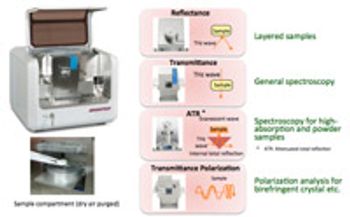
Now at a practical size and price, terahertz spectroscopy is advancing as a nondestructive method of analysis for solid forms and tablet coatings.
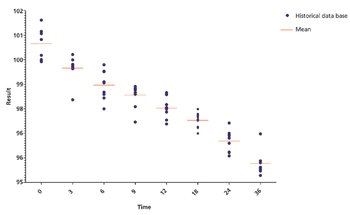
The authors discuss three methods for identification of out-of-trend (OOT) results and further compare the z-score method and the tolerance interval in OOT analysis for stability studies.
Microwave spectroscopy overcomes some of the limitations of circular dichroism and vibrational circular dichroism in analyzing enantiomers.
Dynamic testing and advances in shear testing provide better insight into powder physical properties and external variables that affect powder behavior.