


Experts share insight into extractables and leachables testing, including high-risk products, analytical testing, and regulatory requirements from FDA and EMA.

There is a great need for sensitive, precise, and easily accessible analytical detection techniques for protein sequencing.

The emergence of mRNA vaccines and cell and gene therapies has pushed innovation in analytical methods.
Effective analytics will eliminate failures, deviations, and non-conformances.

Experts share insight into extractables and leachables testing, including high-risk products, analytical testing, and regulatory requirements from FDA and EMA.

A two-day workshop on the "science behind pharmaceutical stability" was held in conjunction with the Annual Meeting of American Association of Pharmaceutical Scientists (AAPS) on Oct. 21-22, 2011 in Washington, DC.
To support global stability practices, fundamental basics must be in place.

This article introduces"mean kinetic relative humidity" for evaluating the impact of humidity variability.
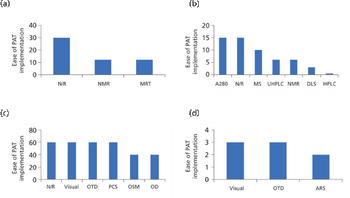
In this paper, the authors review the various analytical methods that can enable use of PAT.
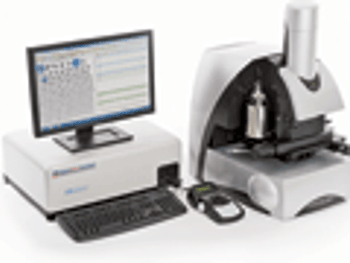
New systems that combine Raman spectroscopy with automated imaging support the efficient gathering of such data, including information concerning size and shape distributions for individual components within a formulation.

Hydrogen deuterium exchange by mass spectrometry is a powerful analytical approach that can be used to map higher order structures of proteins.

This discussion aims to outline an approach to metal contamination prevention that should achieve a level of control acceptable to all stakeholders.
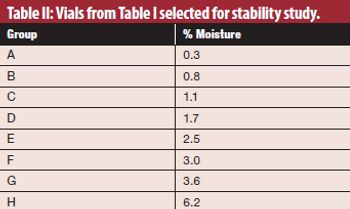
Using an alternate moisture-generation method may provide more accurate data for regulatory submissions.
The authors describe a process for generating high affinity, fully human antibodies in culture.

This article focuses on the growing need for effective data management in the life sciences industry-especially among smaller pharmaceutical manufacturers.

Developing analytical methods and performing related testing is crucial for ensuring the quality of a pharmaceutical product.
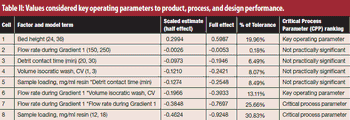
Critical process parameters (CPPs) and their associated process controls are crucial to drug development and process validation and to the evaluation of every manufacturing unit operation.
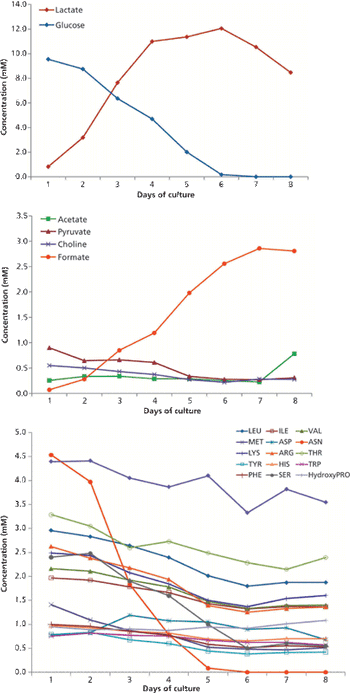
The author discusses current expectations in bioprocessing and lays a framework for using NMR to enhance a QbD approach.

Equipment and Processing Report
PharmTech's monthly newsletter, Equipment and Processing Report, reviews the Editor's Picks for the October 2012 edition from UFP Technologies and Mettler Toledo.

Managing risk in biopharmaceutical operations is of utmost importance for patient protection.
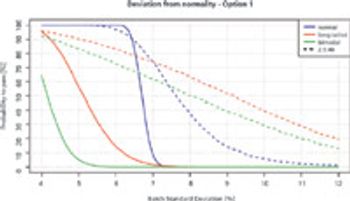
New European Pharmacopoeia chapter aims to resolve problems with applying the harmonized UDU test to large sample sizes.
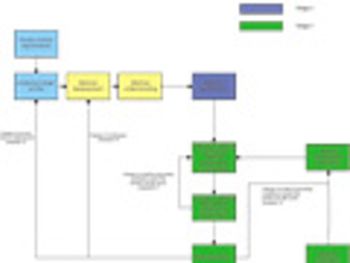
The authors describe how traditional approaches to analytical method and validation may benefit from alignment with quality-by-design concepts.
Potency is a required measurement to determine the amount of active ingredient contained in a preclinical dose formulation. Assessing potency ensures that the test system receives the appropriate amount of active ingredient based on predetermined specifications.

Real-time experimentation may offer continuous process improvement.
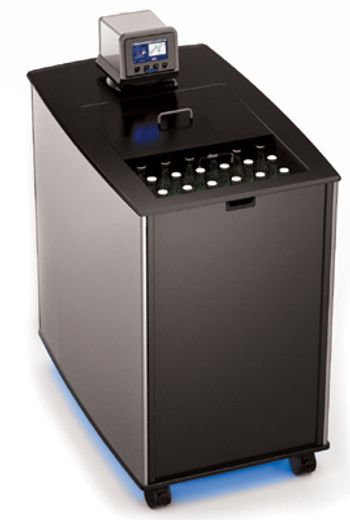
New product reviews for October 2012, featuring analytical equipment.
International trade can be great for business, but breaking border laws can put one in hot water.

Industry experts share perspectives on analytical instrumentation, methods, and data analysis.
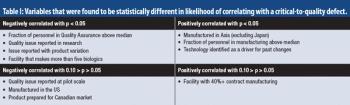
MIT survey results address product and site characteristics that statistically correlate with quality performance.
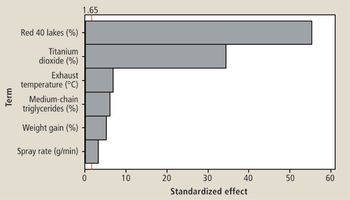
The authors describe a QbD study that was performed to optimize a coating system.