


A firm grasp of probability and ongoing re-evaluation are key.

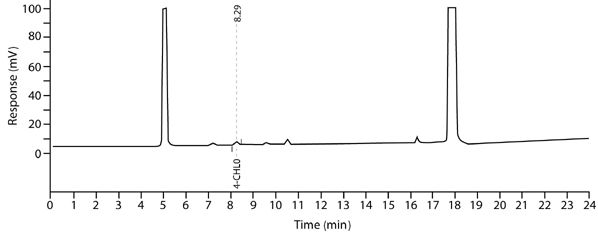
There is a great need for sensitive, precise, and easily accessible analytical detection techniques for protein sequencing.
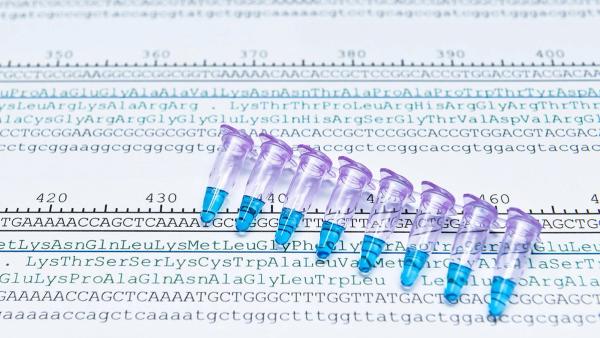
The emergence of mRNA vaccines and cell and gene therapies has pushed innovation in analytical methods.
Effective analytics will eliminate failures, deviations, and non-conformances.

A firm grasp of probability and ongoing re-evaluation are key.
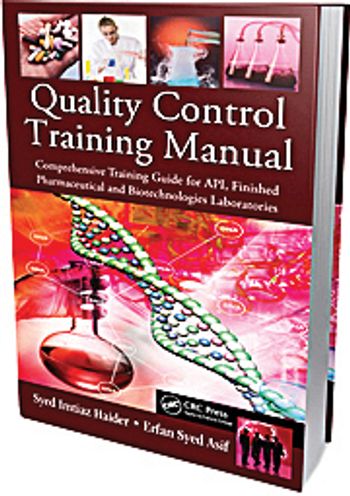
A book about developing quality-control training manuals provides a wealth of information and a dearth of practical help.
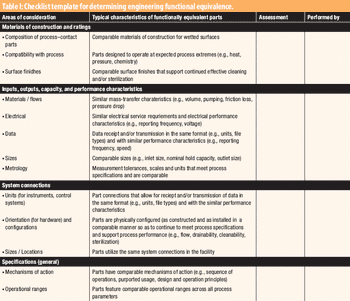
The second in a series of eight case studies from the Product Quality Research Institute focuses on functional equivalence for equipment.
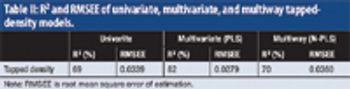
This study demonstrates the beneficial use of a spatial-filter velocimetry particle-size analyzer during granulation.
Thomas P. Layloff describes the advantages of using thin-layer chromatography methods for counterfeit detection. This article contains bonus online material.

Analytical detection techniques help combat counterfeit drugs.

Respondents to the 2011 PharmSource-Pharmaceutical Technology Outsourcing Survey paint a positive picture, but concerns linger under the surface. This article is part of a special issue on Outsourcing.
Manufacturers are facing ever-increasing competition while end users are expecting better value and efficacy. The authors discuss these challenges and offer practical solutions.
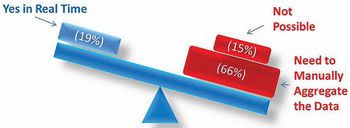
The authors review current industry challenges and trends in managing global supply chains and propose best practices for improving visibility into those networks.
The authors share their approach and experience working in complex, multicompany environments for in-licensed products to develop successful chemistry, manufacturing, and controls packages for managing outsourcing partnerships.
The pharmaceutical industry and US regulatory bodies have not responded adequately to the increasing level of outsourced manufacturing in countries such as China and India, according to a new white paper by the PEW Health Group.
Equipment and Processing Report
We?re attempting to validate a clean-in-place process using total organic carbon (TOC) as the analytical method. Our swab-sample recovery tests are giving us inconsistent results. Recovery values range from 95% to 205%, and there seems to be no correlation with the amount of drug product deposited on the coupon. What could be the problem?
FDA banned the importation of products manufactured at the Mexican unit of Dr. Reddy's Laboratories. The import ban is a result of the company's failure to correct the violations listed in a recent Warning Letter to the agency's satisfaction.
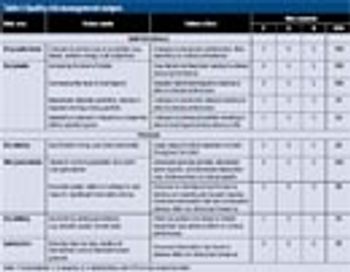
A PQRI expert working group provides case study examples of risk-management applications.
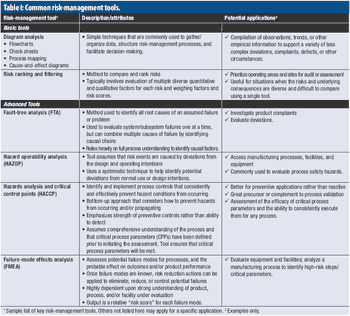
A PQRI expert working group provides case study examples of risk-management applications.

Pharma's drive for manufacturing efficiency is bolstering particle-characterization technologies.
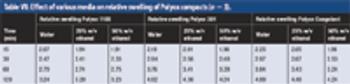
The authors investigate the influence of hydro-alcoholic media on hydration and drug release from polyethylene oxide extended-release matrices.
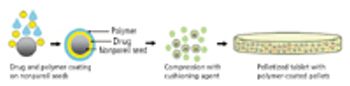
The current review describes the role and selection of excipients, pellet core, coating materials, and compression with various cushioning agents.
Equipment and Processing Report
Two popular methods for detecting protein aggregates are analytical ultracentrifugation (AUC) and size-exclusion chromatography?multiangle light scattering (SEC?MALS). These techniques? results correlate relatively well, but each one has its own strengths.

Ensuring compliance though increased statistical knowledge and resources.
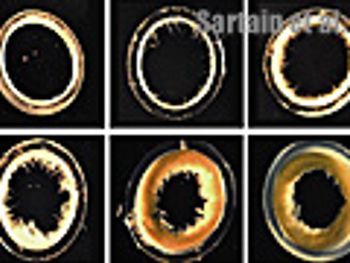
A holistic approach to establishing robust control measures.

Industry associations will soon provide new recommendations about extractables and leachables.
Equipment and Processing Report
Recent recalls, including that of American Regent?s caffeine and sodium benzoate injection on May 5, 2011, highlight the importance of particulate inspection, and they might lead observers to ask whether current inspection methods are sufficiently effective.
Equipment and Processing Report
How do you assign a minimum sample weight for a US Pharmacopeia <41> balance application when the tested repeatability gives a standard deviation of zero?
Editor's picks of analytical instrumentation products for May 2011.