
What makes a drug ripe for respiratory delivery?
What makes a drug ripe for respiratory delivery?
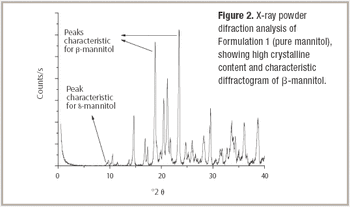
Mannitol is the most commonly used bulking agent in freeze-drying formulation design. The benefit of using mannitol is that it crystallizes during freezing and permits drying processes at higher product temperatures, and thus with higher sublimation rates relative to purely amorphous systems (1). Mannitol, however, is known to form different crystalline modifications which compromises reproducibility of product characteristics and storage stability due to phase transformations (2, 3).
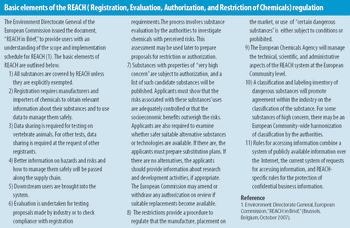
The European Union's REACH initiative has the potential to affect the flow of chemicals into the pharmaceutical suppy chain.
ePT--the Electronic Newsletter of Pharmaceutical Technology
Scientists at The Wistar Institute are taking further steps into understanding a gene regulator that can lead them closer to developing new cancer therapies.
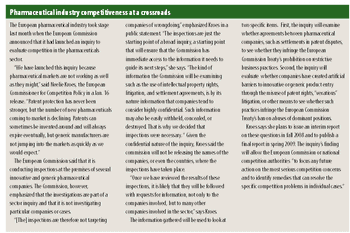
Contract manufacturers expand capabilities in aseptic processing, clinical-trial materials supply, and cytotoxic manufacturing.
An updated book summarizes recent research for formulators and drug-delivery specialists.
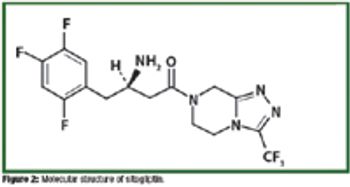
Researchers and process chemists share approaches in synthesis of active ingredients and pharmaceutical intermediates.
Pharmaceutical manufacturers often avoid putting new excipients in their formulations for fear of more regulatory oversight. IPEC has a solution.
A surge in capacity in contract microbial and mammalian cell-culture is underway to meet rising production needs for biopharmaceuticals.
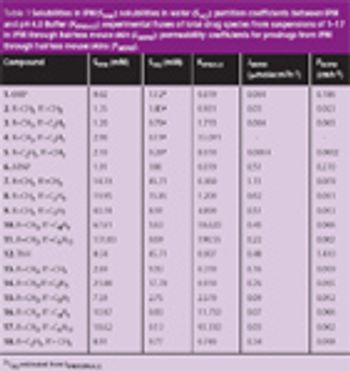
Pharmaceutical Technology Europe
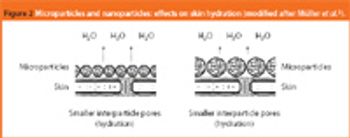
The permeation of drugs through the skin is compromised by the presence of polar functional groups such as thiols, alcohols, phenols, imides or amides. By transiently masking these polar functional groups as prodrugs the permeability of drugs containing these functional groups through the skin can be improved.
Pharmaceutical Technology Europe
Lipid-based drug delivery systems - such as liposomes, micro-and nanoemulsions, self-emulsified drug delivery systems, and solid lipid micro-and nanoparticles - are becoming more popular because lipid materials are easily characterized, contain a high range of well-defined/tolerated surfactant molecules and can be developed for several administration routes.
ePT--the Electronic Newsletter of Pharmaceutical Technology
Company and People Notes: BASF raises prices on excipients; Verus Pharmaceuticals appoints president and CEO; more.
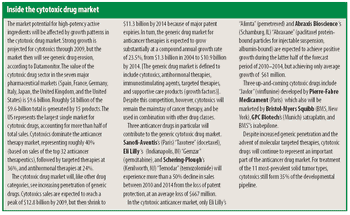
Market demand for cytotoxic drugs is leading CMOs to expand their API manufacturing and formulation services.
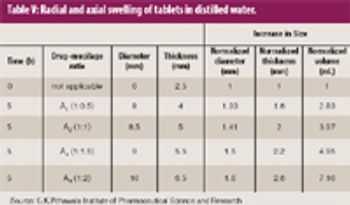
Natural gums and mucilage have been widely explored as pharmaceutical excipients. The goal of this study was to extract mucilage from the leaves of Aloe barbadensis Miller and to study its functionality as an excipient in pharmaceutical sustained-release tablet formulations.

The EIP process addresses the problems encountered with numerous questionnaires when qualifying excipient manufacturers.
Pharmaceutical Technology Europe
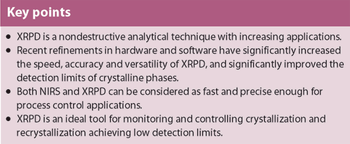
The crystalline structure of pharmaceutical solids can sometimes be altered during processing. X-ray powder diffraction and near infrared spectroscopy can be used to determine the amorphous and crystalline content of a model substance. The two techniques' precision, accuracy, detection limit and the speed of analysis are compared.
ePT--the Electronic Newsletter of Pharmaceutical Technology
The European Fine Chemicals Group (EFCG) issued a position paper on excipients used in pharmaceutical manufacturing at CPhI Worldwide last week.
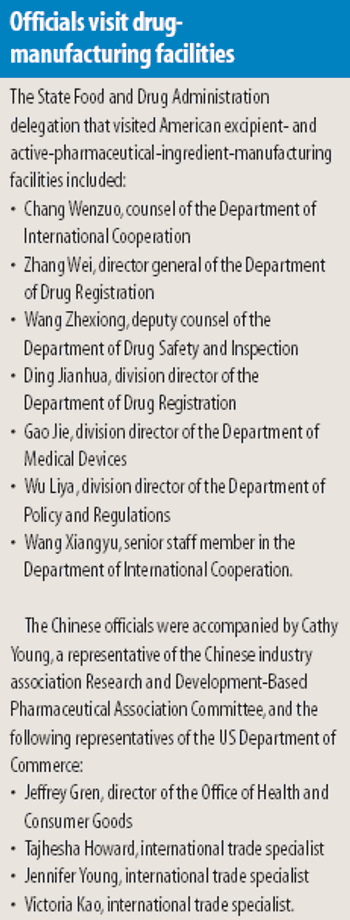
As China emerges as a significant supplier of pharmaceutical ingredients, it must assure other countries of the safety of its excipients.

Amidst debate, the European Pharmacopoeia Commission is working to include physical or "functionality-related characteristics" of exipient materials in its monographs.
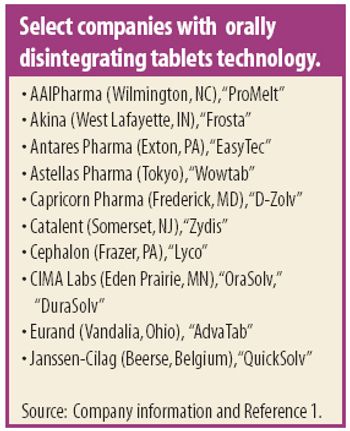
Orally disintegrating tablets (ODTs) continue to attract attention as an alternative to conventional oral dosage forms.
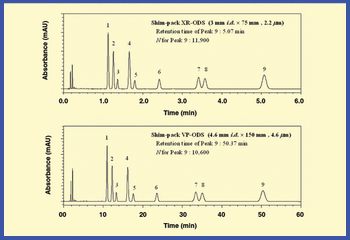
The authors review methods for reducing analysis time and increasing throughput that are reliable and maintain data integrity.
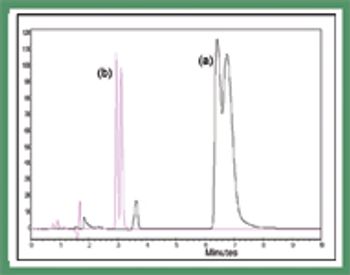
Polysaccharide-based chiral stationary phases have been developed that comprise chiral selectors immobilized on their support rather than being physically coated. These materials are completely solvent stable, thereby increasing selectivity and and enabling the development of new chiral selectors that have been too unstable in a coated form for general use.
The combination of supercritical fluid chromatography with chiral separation media offers several analytival advantages over traditional liquid chromatography techniques.
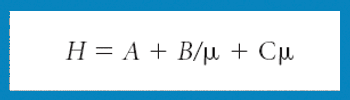
Ultrahigh pressure liquid chromatography maximizes efficiency, but, as defined by the resolution equation, the stationary phase is still a crucial consideration when attempting to resolve mixtures of compounds.
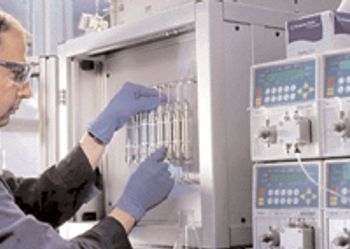
High performance liquid chromatography has become an efficient technique at the production scale, and simulated moving bed chromatography provides several benefits during processing.