


ePT--the Electronic Newsletter of Pharmaceutical Technology
Research Triangle Park, NC (Nov. 13)-Eisai Inc. broke ground here for a new pharmaceutical production and formulation research and development facility for parenteral oncology drugs.
ePT--the Electronic Newsletter of Pharmaceutical Technology
Research Triangle Park, NC (Nov. 13)-Eisai Inc. broke ground here for a new pharmaceutical production and formulation research and development facility for parenteral oncology drugs.
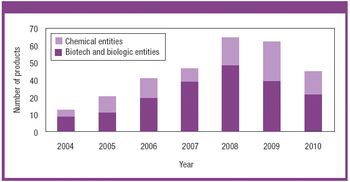
There is a growing need for patient-compliant dosage forms within the cancer therapeutics and biotechnology areas. Ease of administration, enhanced therapeutic efficacy, and reduced side effects are factors that differentiate drug delivery products from conventional dosage forms and provide a competitive advantage. This article reviews salient trends in the parenteral drug delivery sector within the realms of a changing regulatory environment, drivers to growth, and recent advances in this field. Challenges associated with bringing parenteral drug delivery concepts to commercialization are discussed.

This article summarizes changes to the Akers–Agalloco aseptic processing risk analysis model (first presented in Pharmaceutical Technology's November 2005 issue) as well as some of the underlying thinking behind the revision. The simplified model makes the method easier to use because of its greater flexibility of environmental control practice. It maintains the emphasis on human activity as the primary consideration in risk management for aseptic processing.
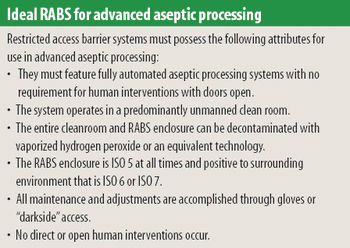
Any aseptic processing technology that allows intervention by gowned personnel during operation cannot be considered an advanced technology. Although a standardized definition of restricted access barrier systems has been developed, these systems fall well short of being classfied as advanced technologies.

The industry has acknowledged only recently the significance of the contamination risk posed by humans. The authors assert that this realization, together with technological advances, will lead to the elimination of human intervention and, hence, improved sterility.

There are few, if any, valid reasons not to install an isolator in a new aseptic processing facility.
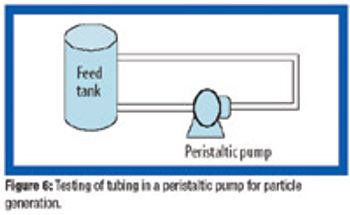
Because of the growing popularity of single-use materials, the identification, characterization, and qualification of new materials used for disposable processes have become increasingly important for both regulatory and production purposes. This article describes one approach to identifying and validating the materials used in a disposable filling process.
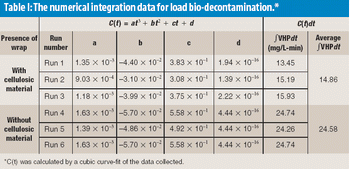
The authors focus on the effects of cellulosic materials during the performance qualification validation of a transfer barrier isolator used for the purpose of sterility testing.
A ready-to-fill closed vial can improve aseptic filling quality and reduce process complexity.
The complete elimination of human-derived contamination is possible only with the elimination of human intervention.
The appropriate barrier system should be selected using a logical, risk-based approach, with awareness of all the possible sources of contamination.
The authors argue that chlorine dioxide (CD) is a safe and effective decontaminating agent that can be used for challenging applications.The effectiveness of CD gas for sterilizing complex isolator systems is studied.
This article outlines a comprehensive approach for organizing a firm's aseptic operations, including planning for routine and nonroutine interventions, establishing effective process simulations, and determining which vials to incubate.
A discussion of the validation and operation of two commercially available vapor-phase hydrogen peroxide decontamination systems is presented, based on a hands-on examination of both systems.
The authors review current industry practices and regulatory expectations for the aseptic processing of sterile drugs. They compare and outline critical issues in current manufacturing technology and capabilities with regulatory requirements.
Big Pharma is ramping up capital spending in parenteral manufacturing at the same time that contract manufacturers are completing their own major investment programs.
The authors suggest a design strategy for an aseptic process simulation that focuses on the basic repeating unit of the process, establishing alert and action criteria for the unit itself, and using worst-case simulations to establish routine operational parameters for the manufacturing process.
The limitation-of-risks (LR) method can be used as an engineering tool in risk assessment work for the identification, minimization, and evaluation of potential airborne risks, and for the identification of adequate monitoring points.
The role of microbial testing to ensure the sterility of aseptically filled sterile products is explained, from the product development phase to in-process monitoring to finished product testing.
FDA's draft guidance on aseptic processing contains some inherent difficulties, including unrealistic expectations of sterility and microbial quantification, an absence of harmonization with international rules, and failure to support new technologies or a risk-based approach. The authors propose a science-based alternative.
In spite of regulatory uncertainties, the industry continues to develop improved aseptic processing technologies.
FDA's aseptic processing draft guidance and the industry's state-of-the-art isolator technologies prepare manufacturers for the next generation of contamination control solutions.
Isolator technology can be used in clinical product formulation and filling facilities to ensure environmental control and reduce contamination risk in aseptic processing.
Members of FDA, industry, and academia formed a working group within PQRI to openly discuss topics from a scientific perspective and provide formalized clarifications and recommendations to FDA to be considered and incorporated into FDA's draft guidance on aseptic processing.
The authors describe the solicitation of industry input for the guidance through a process that included a 2002 meeting of the Advisory Committe on Pharmaceutical Science and the subsequent formation of the PQRI Aseptic Processing Working Group.