


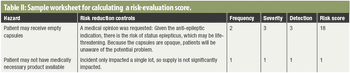
This risk-management case study focuses on assessing empty capsules.

This risk-management case study focuses on assessing empty capsules.
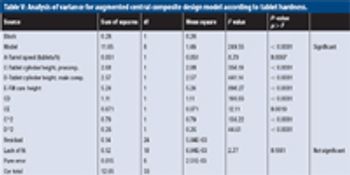
The author prepared and analyzed a detailed design of experiments for the manufacture of a simple tablet formulation. The aim was to test whether tablet hardness and weight could be controlled during the compression process by adjusting certain machine parameters.
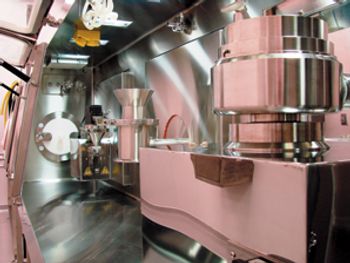
A Q&A with Joe Cascone, director of potent pharmaceutical development at Metrics, moderated by Patricia Van Arnum. Discussion of the key considerations made in facility design, equipment selection, and operations to achieve desired levels of containment.

FDA published a draft guidance that lists recommendations to follow, data to provide, and criteria to meet and describe in new drug applications and abbreviated new drug applications for scored tablets.

Xevo TQD provides ultimate consistency between analyses; instrument to instrument, lab to lab; both the advanced technology of the ACQUITY UPLC System and the robust universal ion source architecture on the Xevo TQD guarantee flexibility and dependability.

The solid form of an API plays a crucial role in drug quality, and advancing methods for screening, detection, and characterization is key.
Equipment and Processing Report
Filling active ingredients directly into capsules is probably the quickest option for entering clinical trials. This case study compares manual and automated methods of capsule filling.
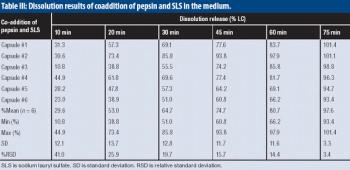
The authors develop a pratical approach to avoid unwanted interactions between pepsin and SLS in dissolution Tier II tests.
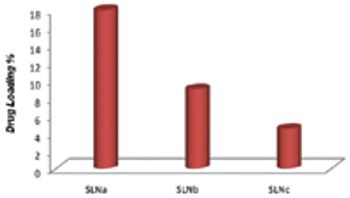
The aim of this study was to prepare and characterize physiochemically and biologically tamoxifen-loaded SLNs to evaluate their effectiveness as a drug-delivery system to treat breast cancers.
Pharmaceutical Technology Europe
The main challenge for tablet manufacturers processing highly potent APIs (HPAPIs) is to protect equipment operators from the inhalation of airborne particles and prevent skin contact with the product during the entire production process: dispensing, granulation, tablet compression, coating and packaging.

Representatives from Pfizer R&D, DEM Solutions, Colorcon, and ARmark Authentication Technologies provide insight into recent tablet-coating technologies.

Pharmaceutical Technology Europe
Pharmaceutical Technology Europe brings together suppliers of tabletting equipment and excipients to discuss the challenges, innovations and latest trends in the tabletting industry.
Pharmaceutical Technology Europe
Although tablet manufacture is traditionally a batchbased wet granulation process, there are many advantages to be gained by adopting dry granulation, including lower costs and increased yields.
Pharmaceutical Technology Europe
Tooling standardisation in the tablet manufacturing industry is a topic that has concerned tabletting professionals for decades.
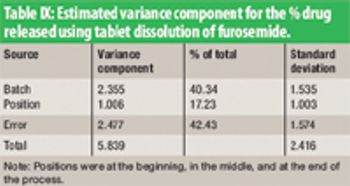
The authors evaluated the manufacturing data of 40-mg tablets of furosemide, a potent diuretic.
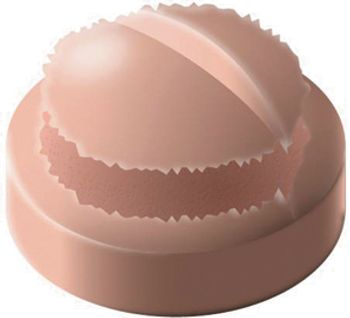
A single, global tooling standard would offer many benefits, but one has been slow to emerge.
FDA issued a draft guidance for industry on Jan. 18, 2011, about the size of beads within drug products labeled for sprinkle.

Industrial and academic partnerships forge new territory in solid-state chemistry.
The authors demonstrated that ODTs can be obtained by direct compression of a mixture of starch, fructose, and SMCC.
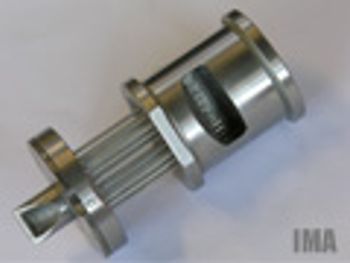
The authors describe an alternative approach to compressing and coating minitablets for use in a sustained-release, solid oral-dosage form. This article is part of a special Drug Delivery issue.
The author outlines how to choose carriers and capsule shells according to dosage requirements and intended use. This article is part of a special Drug Delivery issue.
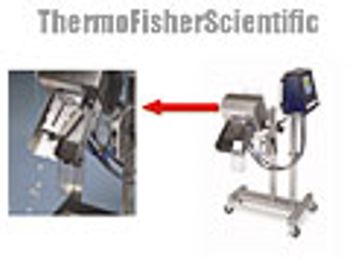
The author discusses new detection-system technologies that can improve performance and provides key criteria to consider when selecting or upgrading a system for pharmaceutical use.
Green chemistry in pharmaceutical development often centers around approaches in the synthesis of the active ingredient, but green-chemistry techniques also can be applied to drug-product manufacturing, formulation development, and drug delivery.
The functionality and performance of three types of commercial superdisintegrants were evaluated in the application of orally disintegrating tablets.
Pharmaceutical Technology Europe
Xavier Parissaux of Roquette explains why the pharma industry's need to reduce organic solvent use is driving innovation in film coatings.