

PharmTech AI Pulse Check episode 2 covers AI data governance, API-gated journals, watermarking limits, and why attribution beats detection in GxP.
PharmTech AI Pulse Check episode 2 covers AI data governance, API-gated journals, watermarking limits, and why attribution beats detection in GxP.
The FDA opened an expedited IND pilot, tightened scrutiny of foreign trial data, and finalized a rule recognizing non-animal testing methods. In Europe, the EMA advanced pharmaceutical legislation reform, restricted 2 legacy products, and opened an injectable-iron safety review.
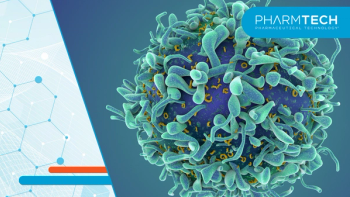
Novartis licenses Abogen's mRNA-encoded T-cell engager for autoimmune disease, raising scale-up questions for mRNA-lipid nanoparticle manufacturing.
Pharma manufacturing spent 90 years learning that producing correct outputs isn't the same as catching your own errors. AI has only learned the first.
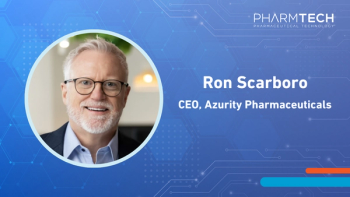
Ron Scarboro, Azurity Pharmaceuticals, explains why real-world usability belongs at product definition and how post-launch feedback should guide drug formulation.
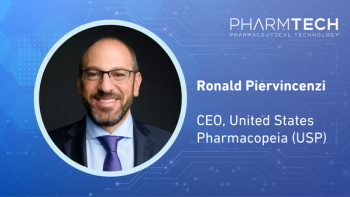
Ronald Piervincenzi, USP, explains why drug supply resilience needs a system approach, from procurement benchmarks to regulatory capacity building.

Gene manufacturing platforms, patient-centric formulations, contract services, packaging innovations, and sterile filling lines are in the spotlight at CPHI Milan 2026.
Ronald Piervincenzi, USP, explains why drug supply resilience needs a system approach, from procurement benchmarks to regulatory capacity building.
Episode 1, Part 3 of PharmTech AI Pulse Check covers why INTerpath-001's AI isn't ChatGPT and names pharma manufacturing's biggest AI governance gaps.

Michael Levy, senior vice president, Digital & Innovation, USP, explains the digital supply chain in a preview of his upcoming CPHI Milan panel presentation, The Next Phase of Pharma Supply Chains.

FDA approves tavapadon, first D1/D5 agonist, validating AbbVie's $8.7B Cerevel deal and an October five-strength oral tablet launch.
Richard Jaenisch weighs how FDA's new NAM rule could reshape preclinical testing and what CMC teams should do now, on Manufacturing Intelligence.
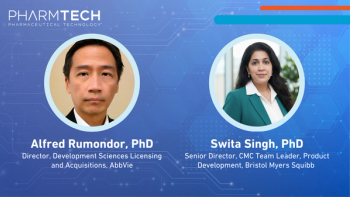
In a preview of their panel discussion at AAPS PharmSci 360 2026, Alfred Rumondor, PhD, AbbVie, and Swita Singh, PhD, Bristol Myers Squibb, discuss the implementation of risk-based approaches for CMC.
Merck licenses SciBrunch's preclinical KRAS G12D inhibitor for $2.13B, raising tech transfer and scale-up questions for oral cancer drug development.
Ronald Piervincenzi, USP, urges drugmakers and purchasers to act on supply chain resilience to curb drug shortages and shape better policy.
Content on PharmTech.com this week ranged from fundamentals on the use of digital pathology in drug development, discussions on the use of AI in pharma, and regulatory actions impacting the industry.

This article discusses risk-based lifecycle governance, system implementation considerations, and the progression of batch record control from paper-based to fully electronic systems.
Ronald Piervincenzi, USP, explains why manufacturers should act now and how benchmarking could reward reliable generic drug suppliers.
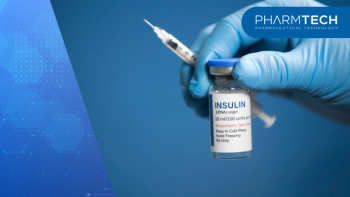
The FDA approves Lilly's once-weekly insulin efsitora for type 2 diabetes, raising Fc-fusion manufacturing, high-concentration pen, and capacity questions.
Florin Muraru, Gourav Pandey, and Richard Jaenisch explain where human sign-off belongs as multi-agent AI and document-parsing models reach GxP.
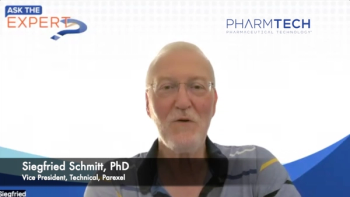
In this episode of Ask the Expert, Siegfried Schmitt, PhD, vice president, Technical at Parexel, and Susan J. Schniepp, distinguished fellow at Nelson Labs, discuss how companies should approach post-approval changes to their CMC regulatory filings.
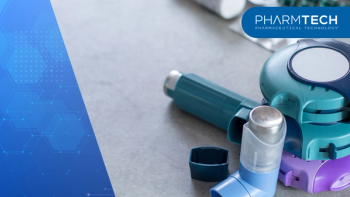
The EC has approved AstraZeneca's Trixeo Aerosphere as the first single-inhaler triple-combination therapy for asthma in the EU, based on phase e data showing improved lung function and fewer severe exacerbations in patients uncontrolled on standard ICS/LABA treatment.
In this episode of Pharma Fundamentals, Dr. Aleksandra Zuraw, senior veterinary pathologist at Charles River, provides an introduction to the use of digital pathology in drug development.

Swedish biotech companies have a broad and varied product pipeline that is attracting attention from venture capitalists and pharmaceutical companies.
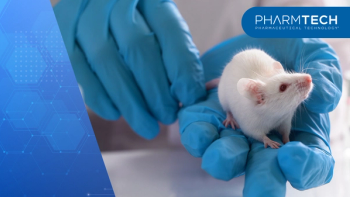
The agency issued a direct final rule that supports the use of innovative testing methods to limit the use of animals and maintain existing safety standards.
Jaenisch, Muraru, and Pandey debate whether AI "slop" is infiltrating pharma SOPs and deviation reports and who should catch it first.
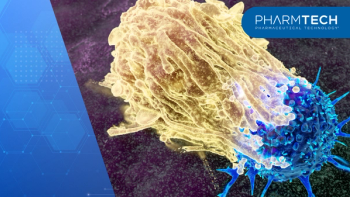
The FDA approves Inluriyo-Verzenio combo for ESR1-mutated breast cancer; EMBER-3 data double PFS, with supply chain and diagnostics implications for manufacturers.

The Leadership Summit will bring senior pharma executives together to discuss supply chain resilience, medicine security, and manufacturing capacity amid growing geopolitical fragmentation.

This week, the FDA opened applications for its Expedited IND Pilot, quality experts presented at the PDA/FDA Joint Regulatory Conference, and Hovione expanded its spray drying capacity.
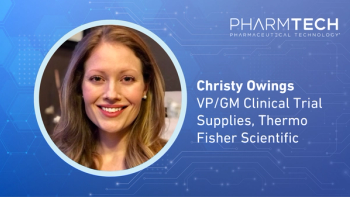
Christy Owings, Thermo Fisher, explains clinical trial supply chain risks in Latin America, importer-of-record strategy, AI, and eCOA delays.