


Cycle design and robustness testing using advanced process analytical technology.
Accurately targeted immunotherapies through reliable neoantigen recognition enable personalized medicine development.
Activation and expansion are essential for success in both autologous and allogeneic therapies.

Continuous manufacturing and a quality-by-design development approach are a natural fit.

Cycle design and robustness testing using advanced process analytical technology.

ePT--the Electronic Newsletter of Pharmaceutical Technology
Also, Alpharma advises shareholders to reject King's offer; ImClone rejects raised BMS offer; Immunogen appoints Daniel M. Junius, more...
The growth and globalization of the pharmaceutical supply chain make risk assessment more important than ever for pharmaceutical manufacturers. The authors describe a program to identify, prioritize, mitigate, and communicate risks in manufacturer–supplier relationships.
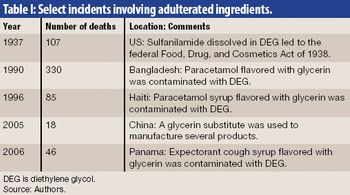
Securing the integrity of the excipient supply chain is a crucial task in ensuring the overall pharmaceutical supply chain. The authors outline excipient-control strategies and practices for the manufacture, distribution, and receipt of excipients.

Pharmaceutical Technology Europe
The design of accurate and robust analytical methodology is instrumental to developing orally inhaled and nasal drug products (OINDPs) and their appropriate control programmes.
Pharmaceutical Technology Europe
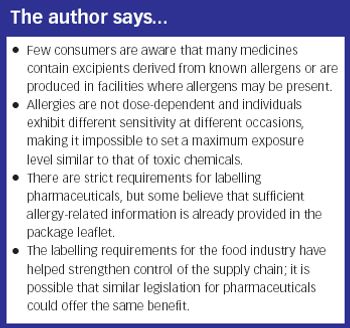
The biggest benefit that has been brought about by the compulsory labelling of allergens in food is the greater degree of cooperation that has been established between food manufacturers and their suppliers.

Pharmaceutical Technology Europe
Nanoparticles can also cross the blood–brain barrier, which could make them useful for delivering drugs that target brain tumours or diseases that affect the central nervous system.
Pharmaceutical Technology Europe
The potent nature of HPAPIs means there must be careful evaluation of the compound for its level of toxicity when considering manufacture.
Pharmaceutical Technology Europe
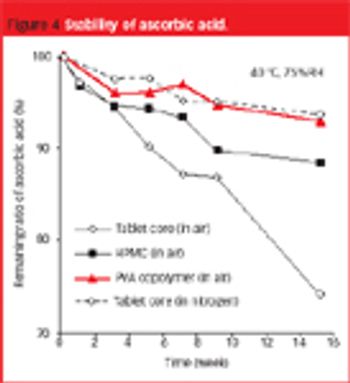
The use of PVA copolymer-based film can solve the problems associated with lack of film adhesion... to tablets containing large amounts of waxy excipient or a lubricant.
ePT--the Electronic Newsletter of Pharmaceutical Technology
Also, Zentiva accepts Sanofi's increased takeover bid, Oriel Therapeutics appoints Richard Fuller CEO, more...
ePT--the Electronic Newsletter of Pharmaceutical Technology
Also, Quintiles to expand Singapore operations; Christine A. Poon, chairman of Johnson & Johnson's pharmaceuticals group, to retire; more...
ePT--the Electronic Newsletter of Pharmaceutical Technology
MannKind and Pfizer (New York) agreed that the former company will help patients who need inhaled insulin switch from Pfizer's "Exubera" medicine to MannKind's "Technosphere Insulin" drug.
ePT--the Electronic Newsletter of Pharmaceutical Technology
Also, Human Genome Sciences enters pact with Hospira, Zosano Pharma names Gail Schulze chair and CEO, more...
ePT--the Electronic Newsletter of Pharmaceutical Technology
Also, Novartis stops development on "Aurograb," Zealand Pharma appoints David H. Solomon as CEO, more...
Brief pharmaceutical news items for September 2008.

This year, the employment survey will acknowledge the industry's best employers.

With economics and politics in the way, can we defeat the malaria epidemic before it defeats us?
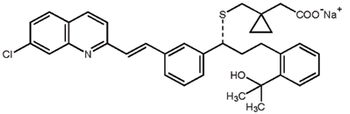
Carbon–hydrogen functionalization, ketone α-alkylation, and biocatalysis are some recent advances in asymmetric synthesis.
Are hypersanitation trends a result of scaremongering or a lack of faith in medicine?
The author explains the planning, equipment, and facility design requried for manufacturing HPAPIs and specialized requirements for handling these compounds.

Pharmaceutical Technology Europe
The challenges of ineffective quality monitoring of complaints, investigations and adverse event reporting can lead to patient harm or death, product withdrawal, and negative financial and brand impact to the organization.
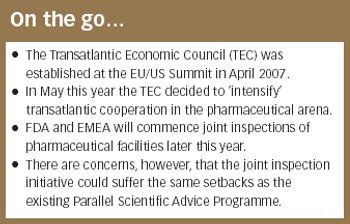
Pharmaceutical Technology Europe
...some companies complained that what they received was not joint advice or combined advice but parallel advice, without coherence...

Pharmaceutical Technology Europe
All commercial sponsors want to maximize their profit and, with a population close to 500 million, the EU is an enormous potential marketplace that they simply cannot ignore!
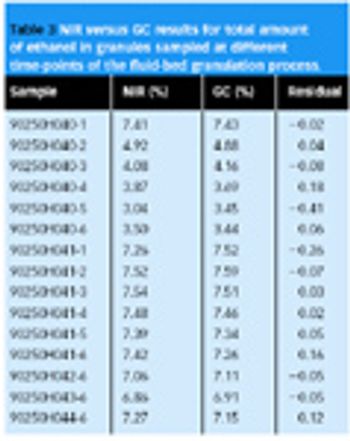
Pharmaceutical Technology Europe
Near-infrared spectroscopy (NIR) is suitable for the analysis of pharmaceutical samples in various solid forms, and can be used for determining chemical properties (e.g., content of drug, water), as well as physical properties (e.g., particle size, tablet hardness).
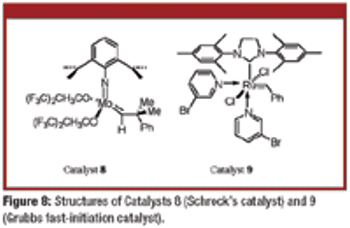
The authors describe the Piers' catalysts and detail latest progress in olefin-metathesis catalyst technology.